Part 1 of 3 in the series The Slow Leak Chronicles: How a Bathroom Falls Apart in Slow Motion.
Bathrooms almost never fail all at once. They fail in slow motion, over years, in a way that looks like nothing until the day it looks like everything. A faucet gets cloudy. A tub develops a chalky ring that scrubbing no longer removes. A chrome handle grows one pit the size of a pinhead. None of it feels urgent. That is exactly the problem.
This series was developed with insights from Rapid Refinishing, whose years of stripping, repairing and resurfacing damaged tubs and tile shaped how we talk about the early stages of failure. They see bathrooms at the point where the small stuff has already won, and they can usually trace the whole mess back to a single spot the homeowner walked past a thousand times.
Water Is Not Just Water
What comes out of your tap is a solution. It carries dissolved calcium, magnesium, iron, sometimes chlorine or chloramine, sometimes sand and grit from older municipal lines. Every time you run the tap, that mixture passes over your aerator, valve cartridge, finish, drain and enamel, then evaporates and leaves the solids behind.
Over one day, nothing happens. Over ten years, with a faucet used forty times a day, you are looking at well over a hundred thousand wet-and-dry cycles on the same inch of metal. That is not cleaning. That is a slow, patient grinding process, and the minerals are winning.
- Calcium and magnesium build crusty white scale that traps moisture against the finish
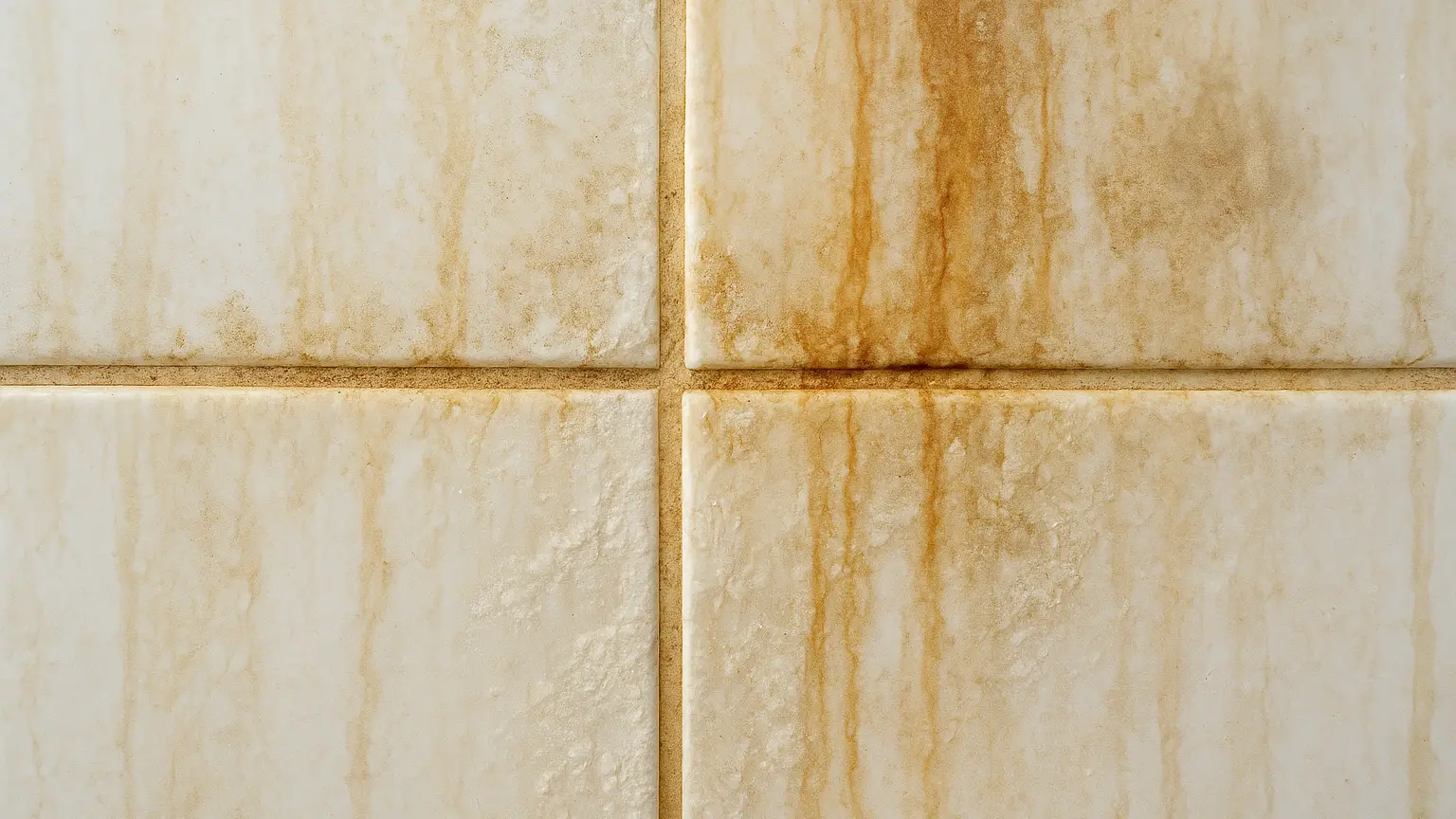
- Iron leaves the orange and rust-brown staining people blame on the fixture itself
- Chlorine slowly attacks rubber seals and O-rings inside the valve body
- Grit and sediment scratch soft finishes and chew at cartridge seats
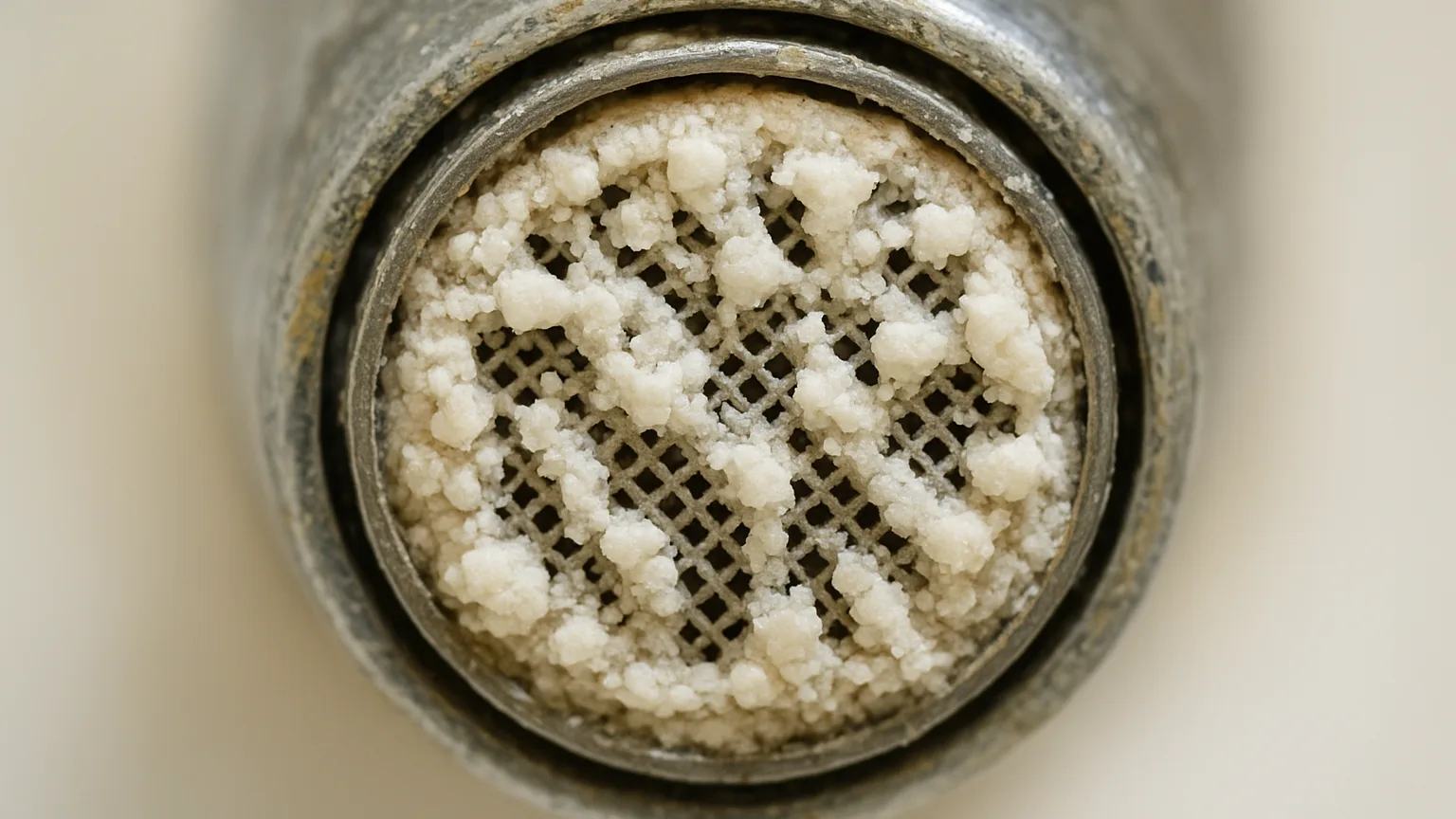
How Thin Plating Gives Way Under Mineral Scale
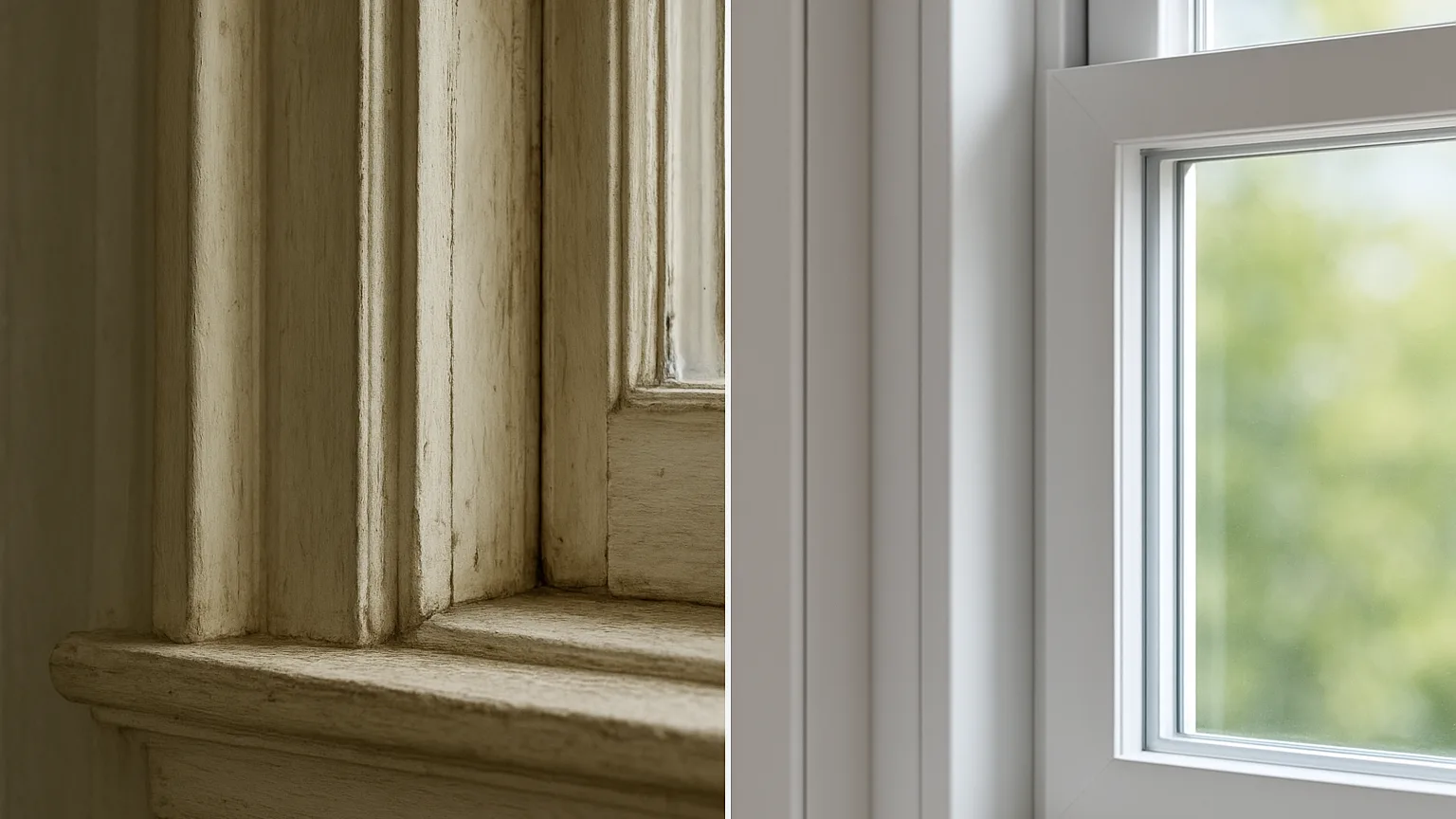
Chrome, nickel and the newer powder finishes are not solid metal. They are thin protective layers over brass or zinc alloy, and chrome plating on a mid-grade faucet can be measured in millionths of an inch, the kind of tolerance that, much like a single inch of window trim, decides whether the finished job reads right or wrong. It is tough the way a windshield is tough: fine under pressure, very bad with a single sharp point.
Mineral scale does two things to that layer. It holds moisture in constant contact with the surface, and it creates a rough texture that people then attack with abrasive cleaners and scouring pads. The scrubbing is often what finishes the job. Once the plating is breached anywhere, water reaches the base metal underneath, and base metal corrodes fast.
Why the Damage Always Starts in the Same Places
Failures cluster where water sits longest and where the plating is thinnest.
- The underside of the spout, where a drip hangs and dries
- The base ring where the faucet meets the deck and water pools
- Handle bases and any tight crease a cloth cannot reach
- Showerhead faces, where scale blocks nozzles and pushes spray sideways
- Drain flanges and overflow plates, often the cheapest metal in the room
For a quick read on your own water, look at the glass shower door or the kettle. Whatever is happening there is happening inside the valve body too, just where nobody is looking.
Pro Tip
Stop using abrasive powders and stiff pads on plated fixtures. If scale is stubborn, soak it. Wrap the spout in a cloth soaked in white vinegar, leave it thirty minutes, then wipe with a soft cloth. Dissolving beats scrubbing every time, because scrubbing is what opens the door for everything that follows. The same restraint pays off with maximizing tile lifespan, where harsh cleaners wear down the glaze that protects everything underneath.
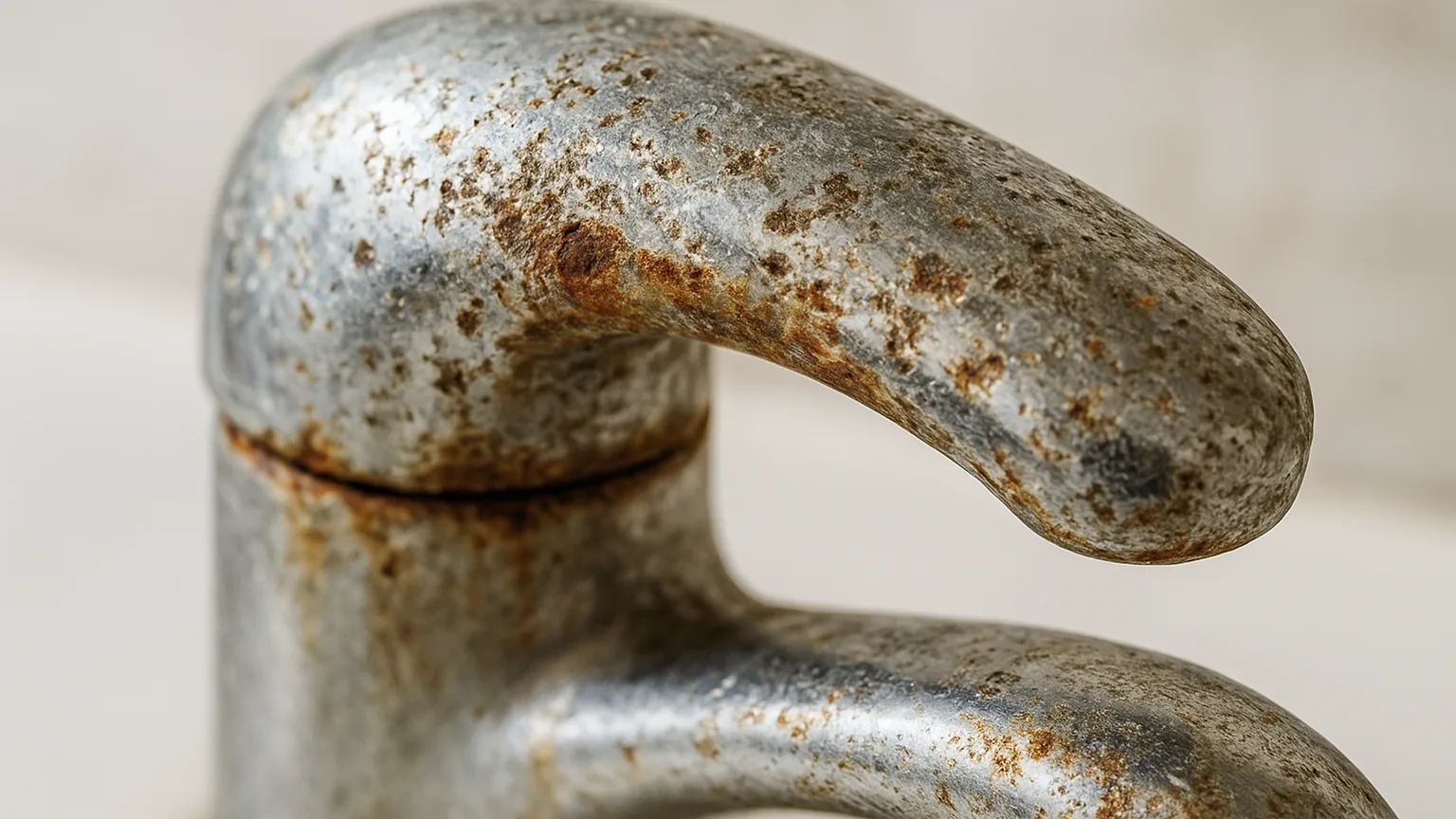
Why a Tiny Chip Never Stays Tiny
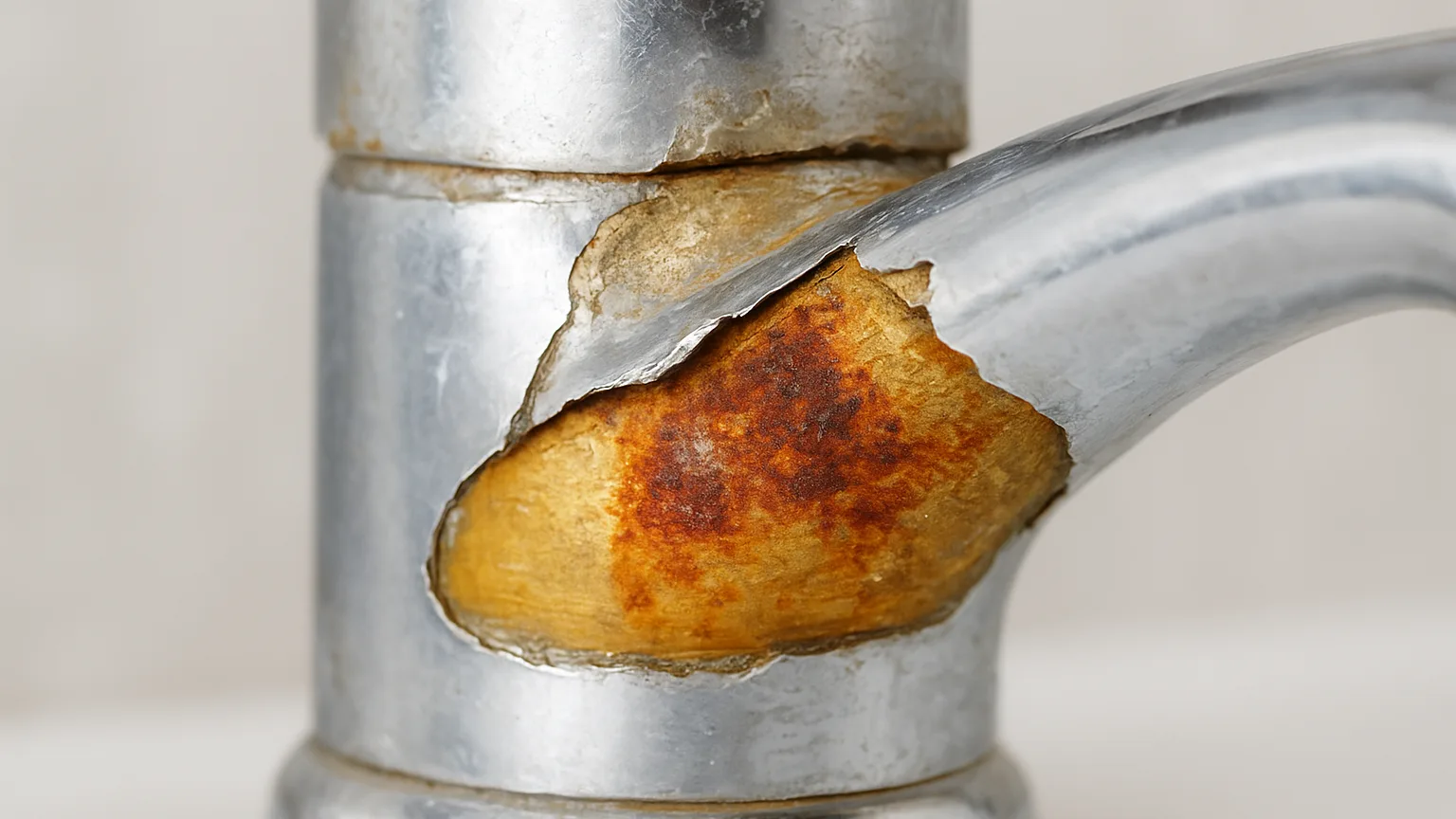
Here is the part most homeowners misread. A chip in enamel or a pit in chrome looks like a cosmetic flaw frozen in time. It is not frozen. It is an entry point, and corrosion under a coating travels sideways.
In a cast iron tub, the enamel is a glass layer fused to iron. Drop a shampoo bottle hard enough and that glass cracks. Water reaches raw iron, and the rust that forms takes up more space than the metal it replaced, pushing outward and lifting the enamel from below. Six months later the chip is three times the size and flaking at the edges. The visible stain is always smaller than the undermined area around it, which is why patching only the orange spot never holds.
Steel tubs behave the same way but faster, because the steel is thinner. Acrylic tubs do not rust, but they craze and the cracks wick water into the backing board. Insights drawn from the refinishing work at Home Titan echo what contractors repeat constantly: surface repairs fail when nobody addresses what is happening behind the surface.
The Stain Is a Symptom, Not the Problem
A rust streak running from the overflow plate down the tub wall usually means water is getting behind the plate and sitting on the gasket, not that the finish is dirty. A brown halo around the drain often means the drain assembly is corroding below the deck. The direction of a stain tells you where the water is actually traveling, which matters more than the color.
Pro Tip: Seal Chips the Week You Spot Them
Fix chips the week you notice them. A chip in porcelain or enamel can be sealed with a touch-up compound for a few dollars in under twenty minutes. Ignored for two years, the same chip becomes a refinishing job or a tub replacement. There is no middle price point, and that cliff edge between cheap and expensive is the whole story of scottsdale handyman work on older bathrooms.
What Scale Is Doing Behind the Wall
Everything above happens where you can see it. The more expensive version happens inside the wall. Mixing valves, cartridges and angle stops rely on small rubber seals and precise machined surfaces. Scale builds on those surfaces the same way it builds on your showerhead, and the first symptom is almost never a leak.
It is stiffness. A handle that needs a firmer turn than it used to. A shower that takes a second longer to reach temperature. A faucet that squeals briefly when you shut it off. Homeowners read these as the fixture getting old rather than scale narrowing the passage and chewing the seat.
When a cartridge finally lets go, it rarely bursts. It weeps. A slow weep behind a wall stays hidden for months, and by the time a ceiling below shows a shadow the framing has already taken the hit, which is why the making a splash approach to catching moisture early matters more than any single repair.
Three Things Worth Checking This Month
- Turn every shutoff valve under the sink and behind the toilet. If it will not move, it has seized with scale and will not help you in an emergency
- Unscrew the aerator and look at the debris inside. Orange flakes mean pipe corrosion, white grit means heavy scale
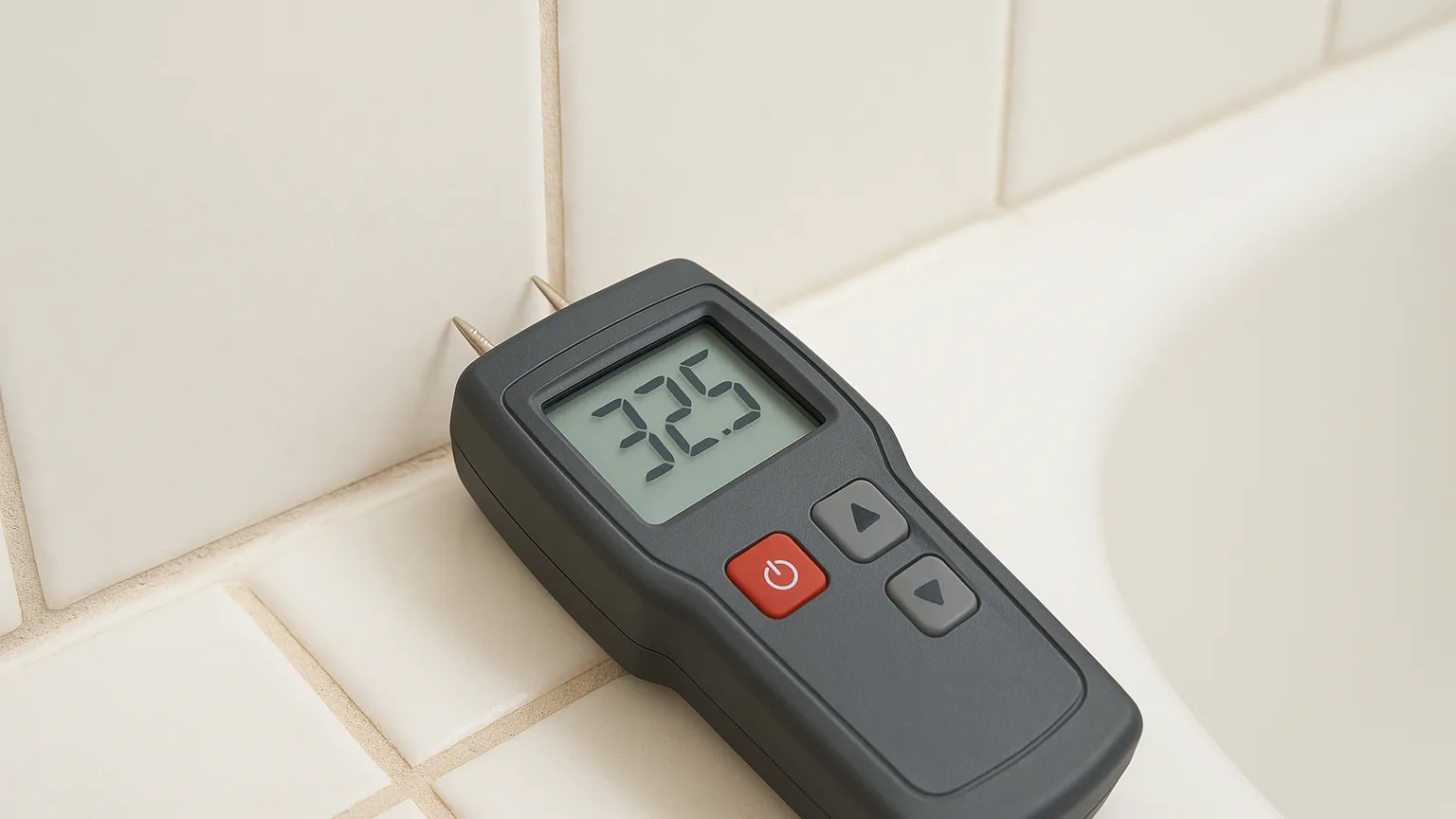
- Feel the wall beside the shower valve. Cool and slightly soft is a warning worth acting on
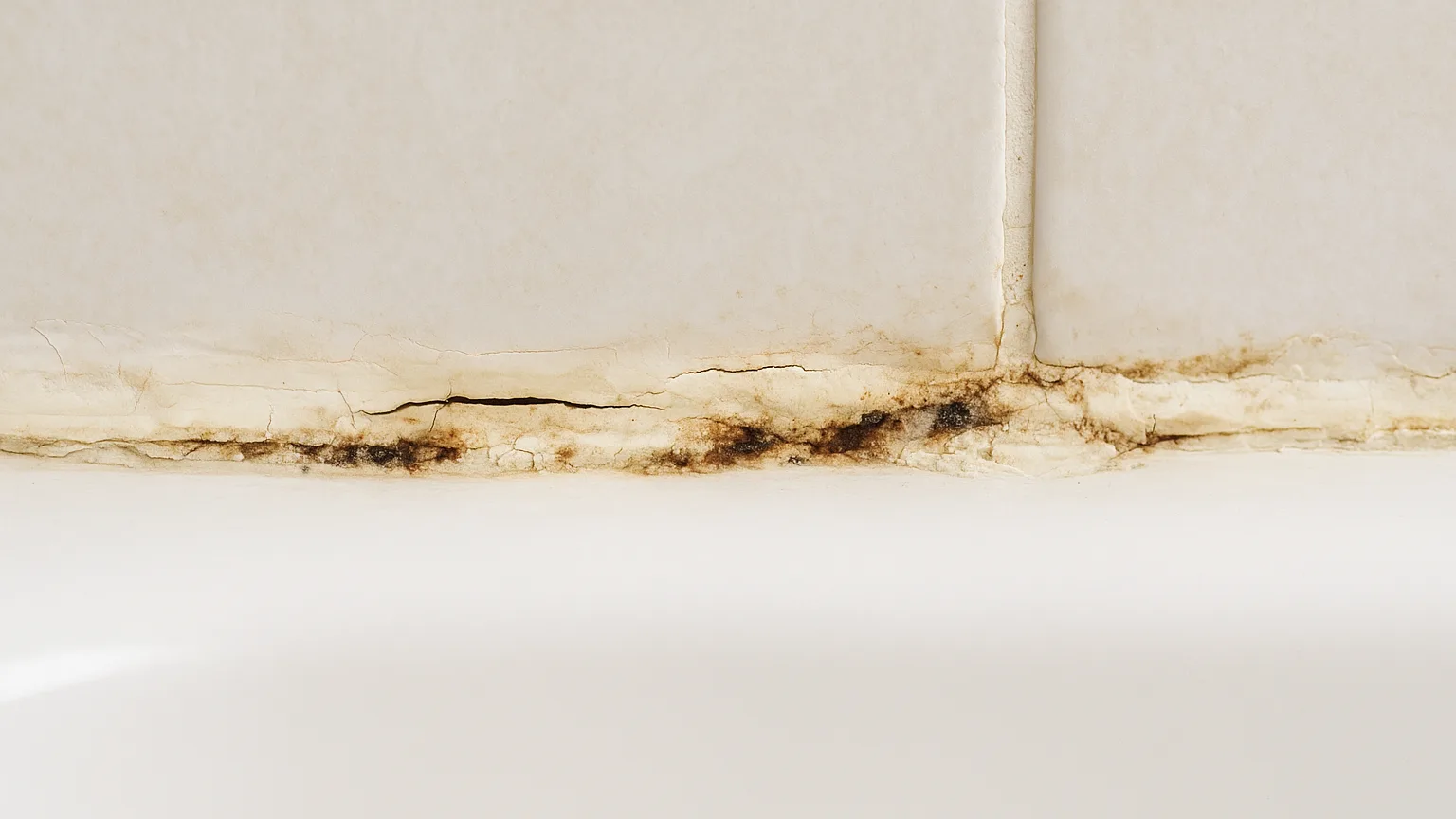
Valve weeping and finish failure both feed water toward the same vulnerable place, the joint where the tub meets the wall and floor. That thin grey seam is the next stop in this series, and what's really happening under explains what water does once it slips past it into subfloor and framing. Later, repair window most homeowners sleep walks through the ten minute inspection most people skip.
Pro Tip
Stop using abrasive powders and stiff pads on plated fixtures. If scale is stubborn, soak it. Wrap the spout in a cloth soaked in white vinegar, leave it thirty minutes, then wipe with a soft cloth. Dissolving beats scrubbing every time, because scrubbing is what opens the door for everything that follows. The same restraint pays off with maximizing tile lifespan, where harsh cleaners wear down the glaze that protects everything underneath.
The Quiet Math of a Bathroom Breaking Down
Nothing described here is dramatic. Minerals settle, plating wears thin, a chip opens, rust spreads sideways under a surface that still looks mostly fine, and a cartridge stiffens behind a wall you have no reason to open. Each step is small enough to ignore and each one makes the next step faster. That is what makes slow damage so expensive. It never asks for your attention until the cheap window has closed.
The good news is that this kind of failure is unusually easy to interrupt. Dry your fixtures, soak scale instead of scraping it, seal chips the week they appear, exercise your shutoff valves, and pay attention when a handle starts feeling different in your hand. None of that takes skill or money. It takes noticing, and noticing is what separates a twenty dollar touch-up from a gutted bathroom four years from now.