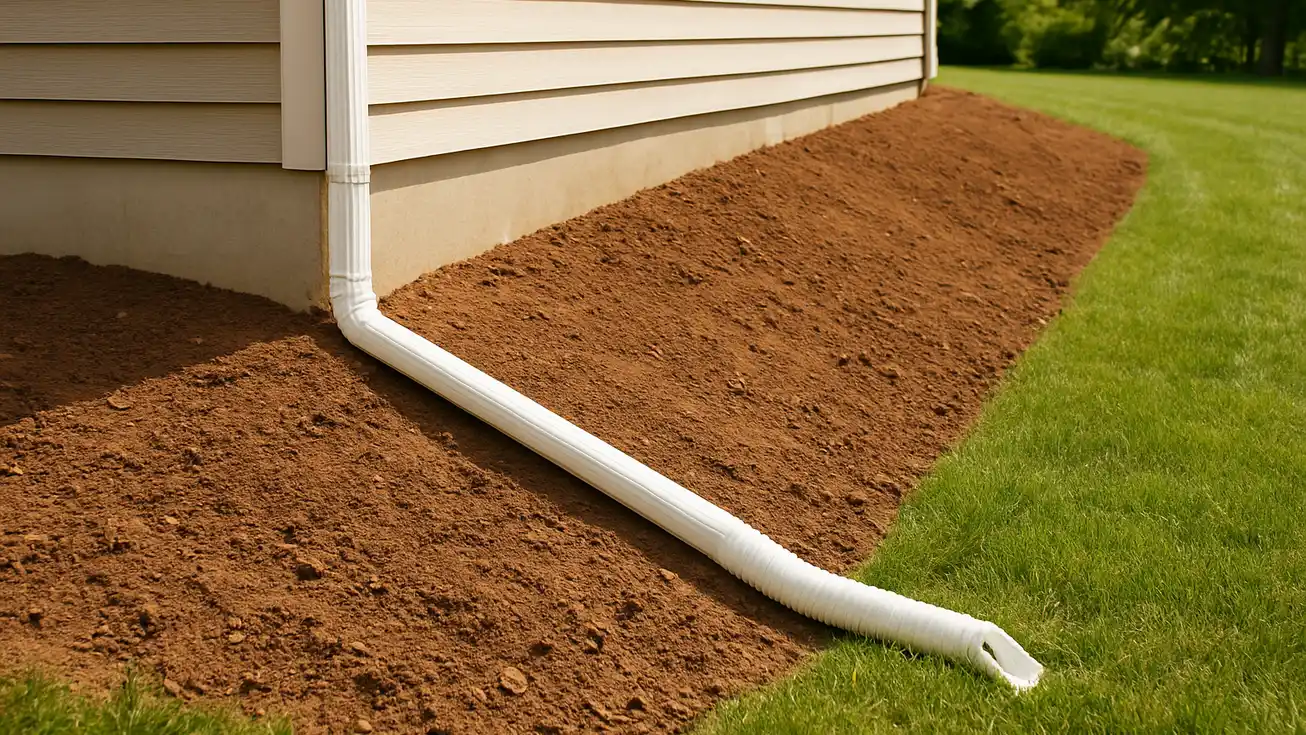
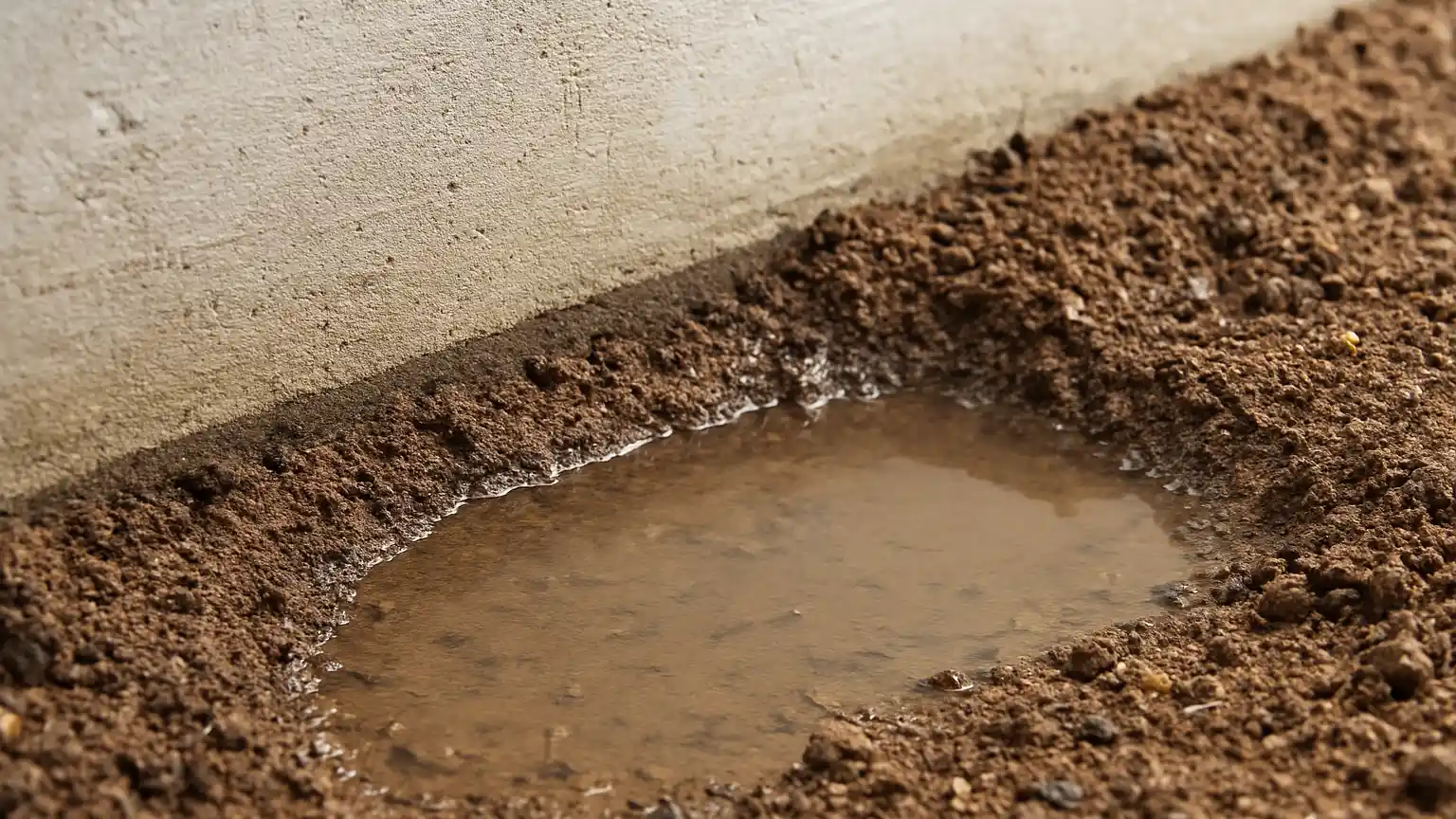
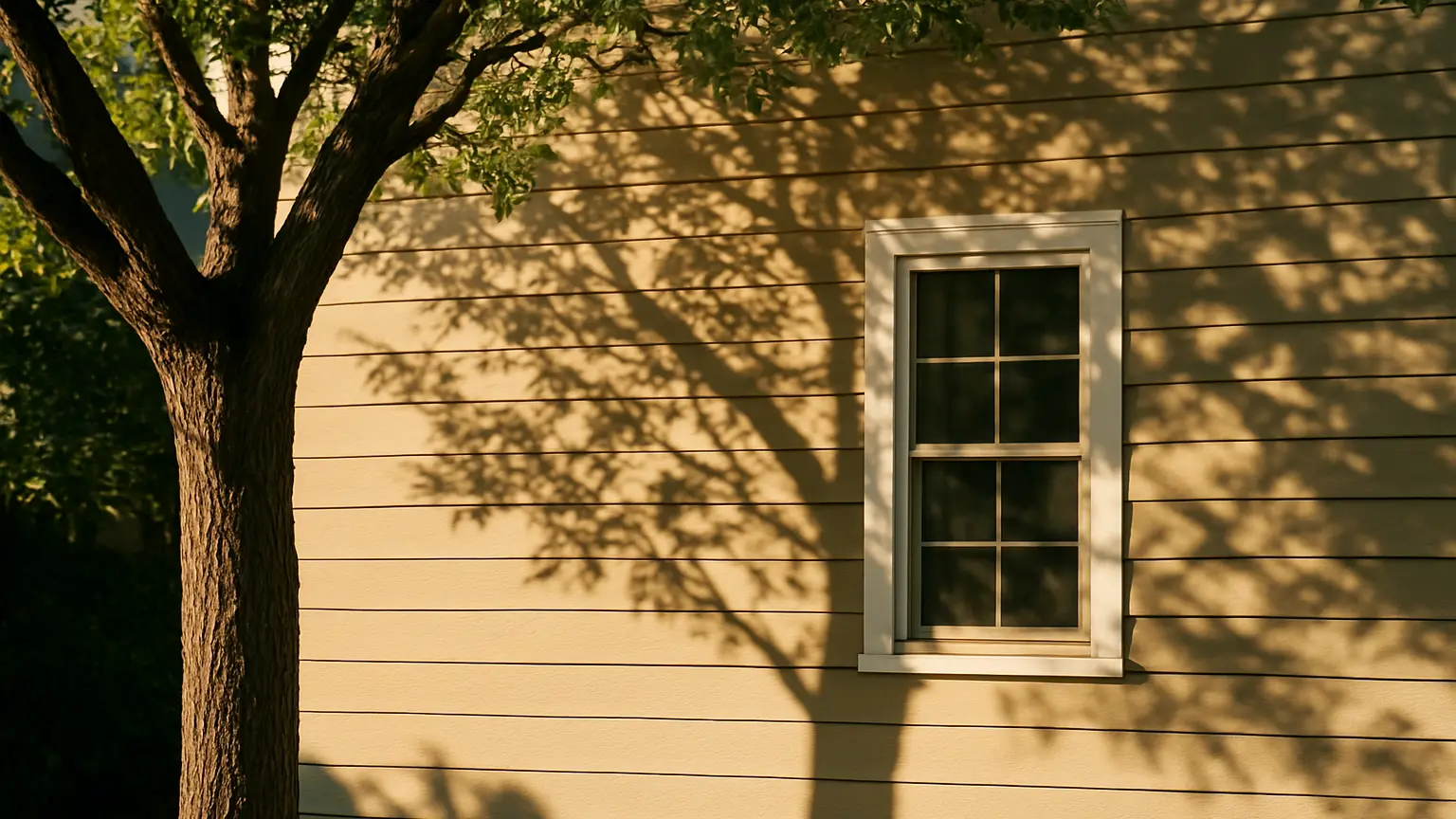
Once you have fixed the slope around your house and pushed downspout water out past the danger zone, a new question shows up. How close can plants grow before they start causing the same damage you just paid to stop? Good grading is only half the job, because every layer of yard protection comes up short if a thirsty tree is drying out the soil under one corner of your slab.
The spacing advice here was shaped by insights from Desert Vine Landscaping, whose hands-on work with trees, shrubs, and irrigation near homes helped turn general rules into practical numbers you can use with a tape measure.
Most people plant by looking at the plant in the nursery pot. That is the mistake. A 3-foot shrub that looks tidy next to the wall today can be 8 feet wide in five years, pressing against the siding and trapping moisture. A skinny sapling can grow a canopy that drops leaves straight into your gutters.
All of this connects back to the water. Leaves that clog gutters dump water at the foundation, undoing the work of fixing the yard's slope. So spacing is not just about looks. It is part of how your house stays dry.
The Rule in One Sentence
Measure from where the plant will end up, not where it starts. Picture the plant at full size. Find the outer edge of that mature canopy. Then keep that edge a set distance away from your walls, roof, and pipes. Everything below is just this rule applied to different parts of the house.
Turning the Rule Into Real Numbers
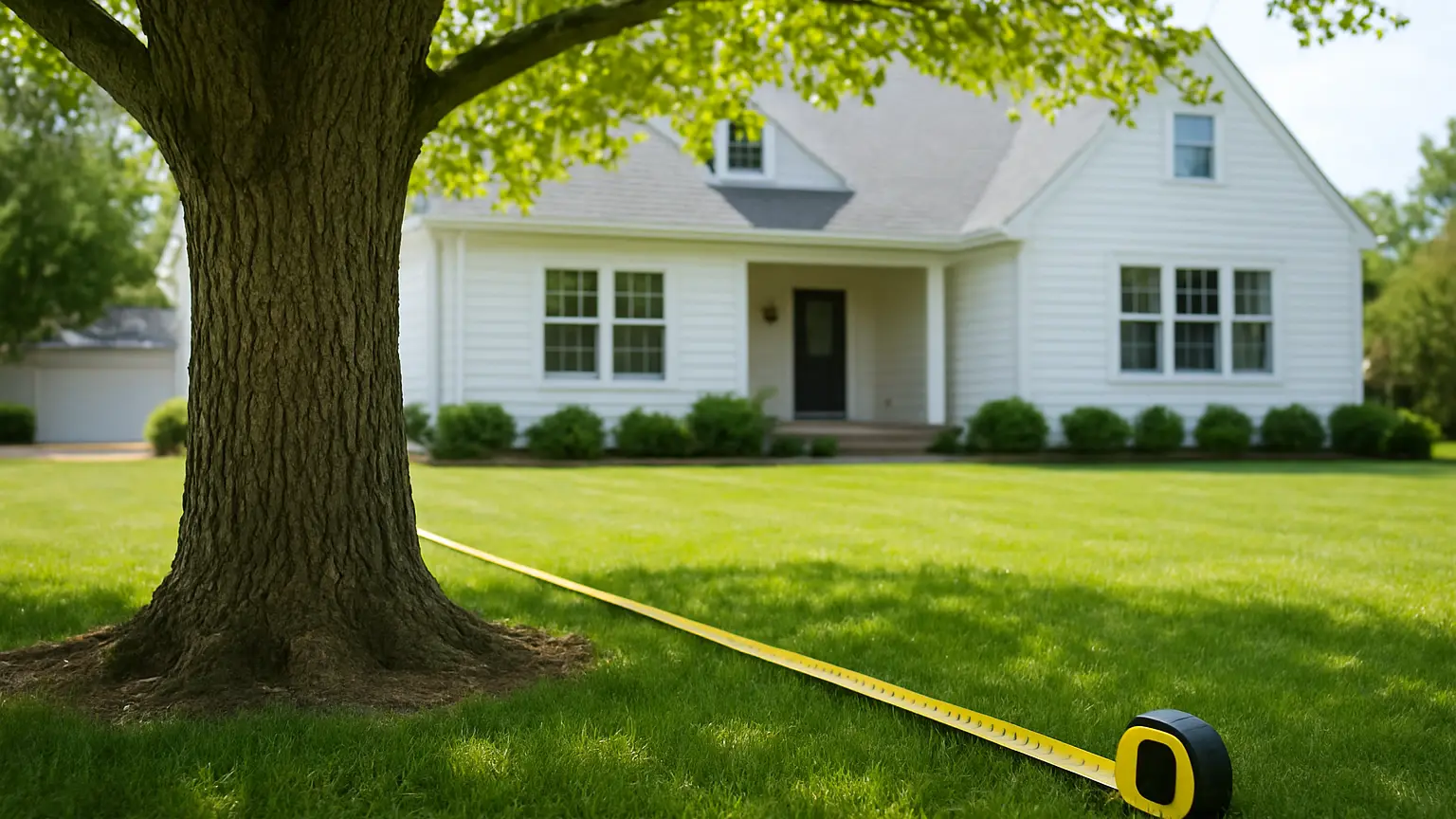
Start with the plant tag or a quick search for the mature width. Cut that number in half. That gives you the distance from the trunk to the outer edge of the canopy. Then add a safety buffer.
Trees
For trees, add at least 5 feet beyond half the mature spread. Here is how that plays out:
- Small tree, 15 feet wide: about 7.5 + 5, so roughly 12 to 13 feet from the wall.
- Medium tree, 30 feet wide: about 15 + 5, so 20 feet from the wall.
- Large shade tree, 60 feet wide: about 30 + 5, so 35 feet or more.
Notice how the small and medium numbers overlap with smart shade placement. A tree 12 to 20 feet off the west wall can still block hot afternoon sun, which is the sweet spot covered in placing trees for real shade. You rarely have to choose between a cooler house and a safe one if you pick the right size tree.
Shrubs
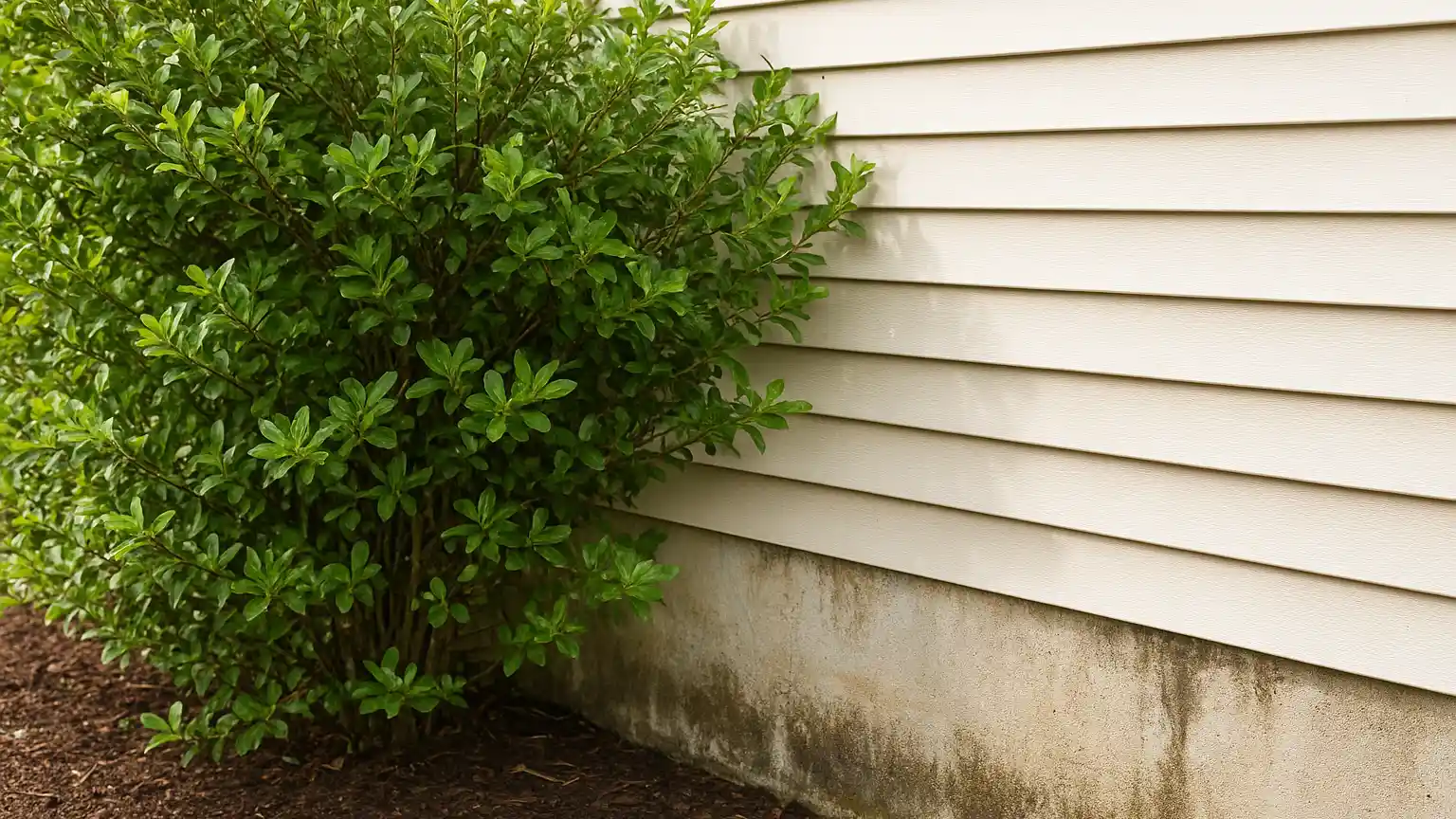
For shrubs, add 2 feet beyond half the mature width. A shrub that grows 6 feet wide should be planted about 5 feet from the wall at its center. That leaves a 2-foot air gap once it fills in.
That gap matters more than most people think. It lets siding dry after rain. It gives you room to inspect for termites and cracks. It keeps branches from rubbing paint off the house every windy day.
Pro Tip: Before planting, lay a garden hose on the ground in a circle the size of the plant's mature width. Stand back and look at it against the house. If the hose touches the wall or crosses a walkway, move the hole. This takes two minutes and saves years of pruning.
What Roots Really Do Near a Foundation
Roots do not usually punch through solid concrete. The real damage is quieter. Roots pull water out of the soil. In clay soil, dry soil shrinks. If the soil under one part of a foundation shrinks while the rest stays put, the house settles unevenly. That kind of uneven movement is exactly what a well-graded yard and extended downspouts are meant to prevent. That is when you see cracks over doors, sticking windows, and gaps in drywall.
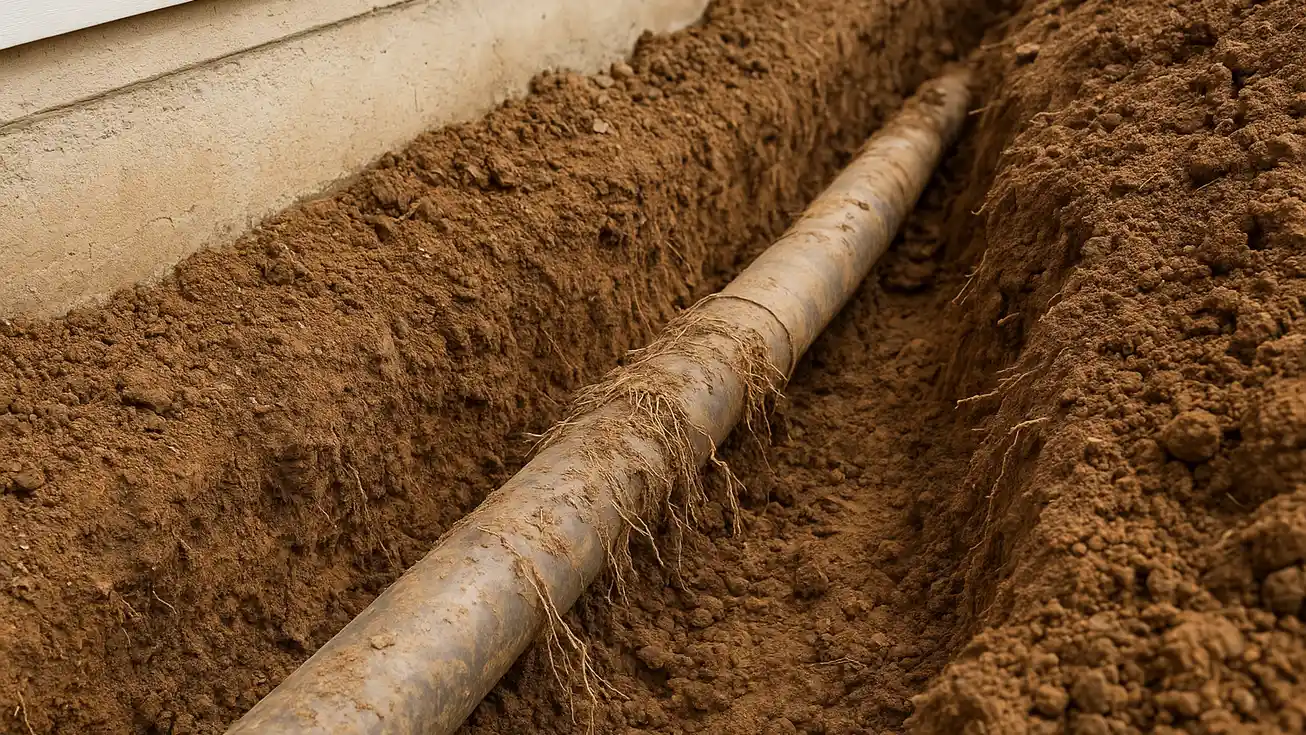
Tree roots also spread much wider than the canopy, often two to three times as wide. Most of them live in the top 18 inches of soil. That is the same layer your foundation sits on and your pipes run through.
Watch the Sewer Line
Old sewer laterals made of clay or cast iron have joints that leak tiny amounts of water and nutrients. Roots find those leaks and grow inside. Over time the pipe clogs or breaks. Some trees are known for chasing water hard:
- Willows and poplars
- Silver maples
- Ficus and eucalyptus
- Many fast-growing shade trees sold as "quick cover"
Keep these at least 30 feet from any sewer or water line, and farther if you can. Slower, smaller trees with less aggressive roots are a better choice near utilities.
Call 811 before you dig. It is free, and crews will mark gas, power, and water lines. Your private sewer lateral usually is not marked, so look for the cleanout cap near the house and trace the likely path to the street.
Pro Tip: Move drip emitters out to the drip line of each plant, not the trunk. Watering at the outer edge pulls roots away from the house. Keep all emitters at least 3 feet off the foundation, so you never add water to the soil you just graded to stay dry.
Above Ground: Roofs, Siding, and the Strip Along the Wall
Branches cause a different kind of trouble. A limb resting on shingles scrapes away the granules that protect them. Overhanging branches give squirrels and rats a free bridge to your attic. Leaves pile into gutters, and a full gutter spills water right where you do not want it.
Aim to keep branches at least 10 feet clear of the roof. If a tree is already planted too close, prune toward that goal over a few seasons instead of all at once. Heavy cuts stress the tree and can make it push out weak new growth.
The Foundation Strip
The first few feet along your walls deserve their own plan. This is where water, soil, and siding all meet. Guidance from Desert Vine Landscaping points toward treating this zone as mostly hard surface or rock, with only light, low plants that need little water. That keeps moisture down and keeps the slope you built intact.
A few habits keep this strip healthy. Hold soil and mulch at least 6 inches below the bottom of the siding. Choose rock or gravel over wood mulch right against the wall, since wood mulch holds water and can invite termites. Skip turf here too. Grass needs steady watering, and lawns under spreading trees often thin out, which is a big part of why Bermuda fails in shade.
Lawns planted under spreading trees also tend to fail for the same reason, and it helps to know why Bermuda struggles in shade before you seed the strip between a new tree and the house. Shade from the tree you placed for cooling will slowly starve sun-loving grass beneath it.
Pro Tip: Before planting, lay a garden hose on the ground in a circle the size of the plant's mature width. Stand back and look at it against the house. If the hose touches the wall or crosses a walkway, move the hole. This takes two minutes and saves years of pruning.
One Yard, Three Jobs, Zero Guesswork
Your yard does more than look nice. Placed right, trees cut the afternoon sun and lower cooling bills. Graded right, the ground carries rainwater away from your basement. Spaced right, roots, branches, and shrubs grow full without drying out the soil, clogging gutters, cracking pipes, or rotting siding. The thread through all of it is simple: plan for the mature plant, keep the foundation strip dry and lean, and give every tree enough room to grow into its job.
So before your next trip to the nursery, grab a tape measure and the plant tag. Halve the mature width, add the buffer, and mark the spot. That small habit turns a pile of separate projects into one working system, where shade, drainage, and structure all support each other. Your house stays cooler, drier, and sound for decades, and your yard finally earns its keep.