Picking the right spot for a shade tree can lower summer cooling bills, as we saw when looking at where shade really helps. But every new bed, tree ring, and pile of mulch changes one more thing about your yard. It changes where the rain goes.
Much of the practical thinking here came from Desert Vine Landscaping, whose crews work with hard soil and sudden storms that drop a lot of water in a short time. Their field experience shaped the grading and drainage advice below.
Here is the slope mistake most people never notice. A yard that drained fine on move-in day slowly tilts back toward the house. Nobody digs a trench aimed at the basement. It happens one inch at a time, over years, while you are busy with everything else, and that slow creep is the costliest gap in how the yard defends your home.
Why Good Slopes Go Bad
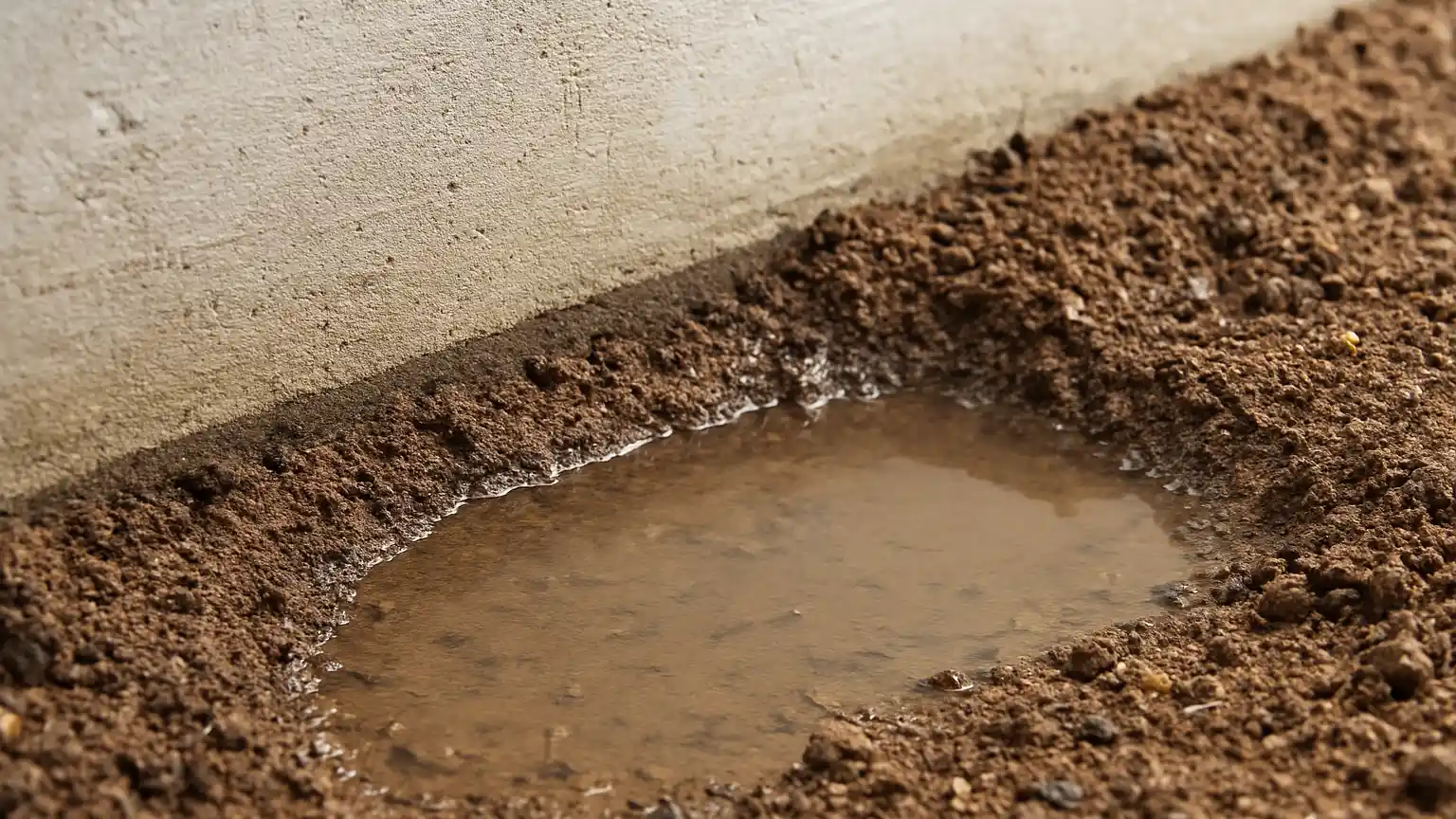
The dirt right next to your foundation is called backfill. Builders dug a big hole, poured the walls, then pushed loose soil back in around them. Loose soil keeps settling for years. As it sinks, it forms a shallow moat along the wall. Rain fills that moat and soaks straight down to the footing.
Settling is not the only cause. Watch for these common culprits:
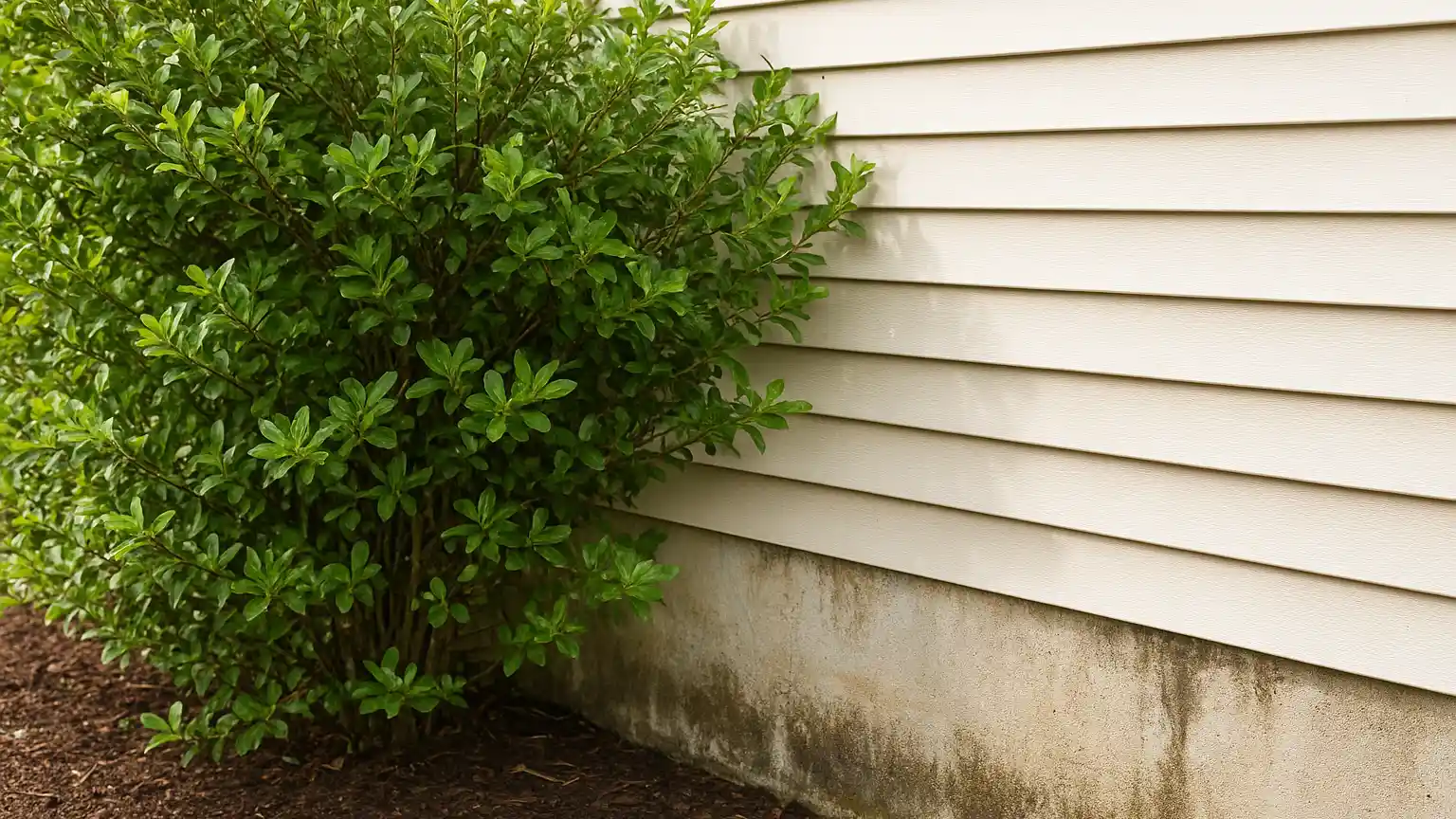
- Raised planting beds built tight against the siding, which hold water like a bowl.
- Fresh mulch added every spring until the bed sits higher than the lawn beyond it.
- New patios or walkways poured flat or tipped the wrong way.
- Tree rings and plastic edging that stop water from running off.
Check Your Slope With a String and a Level
You do not need a surveyor to find out which way your yard leans. You need two stakes, some string, a cheap line level, and a tape measure. Set aside twenty minutes on a dry afternoon.
- Stake one: Drive it into the ground right against the foundation.
- Stake two: Drive it 10 feet out, straight away from the house.
- Level the line: Tie string to both stakes at the same height near the house, hang the line level in the middle, and slide the string on the far stake until the bubble sits centered.
- Measure: At the far stake, measure from the string down to the ground.
You want at least 6 inches of drop over those 10 feet. That is a little more than half an inch per foot. Less than 3 inches is a warning sign. If the ground is higher at the far stake than at the wall, water runs toward your house every single time it rains.
Repeat the test every 15 to 20 feet around the house. Pay extra attention to corners, the ground under downspouts, and anywhere you added a bed or a tree in the past year.
Clues You Can Spot Without Any Tools
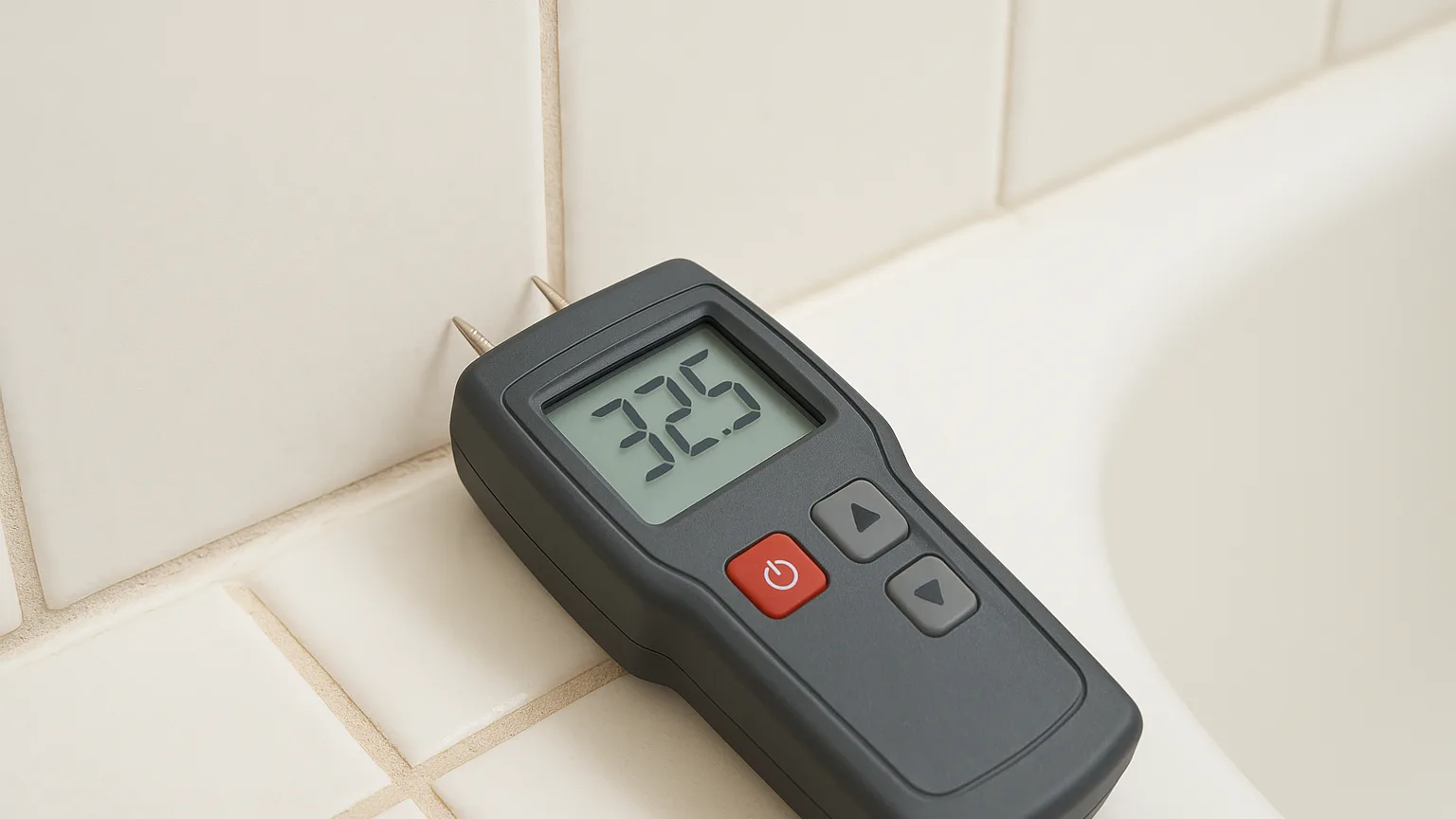
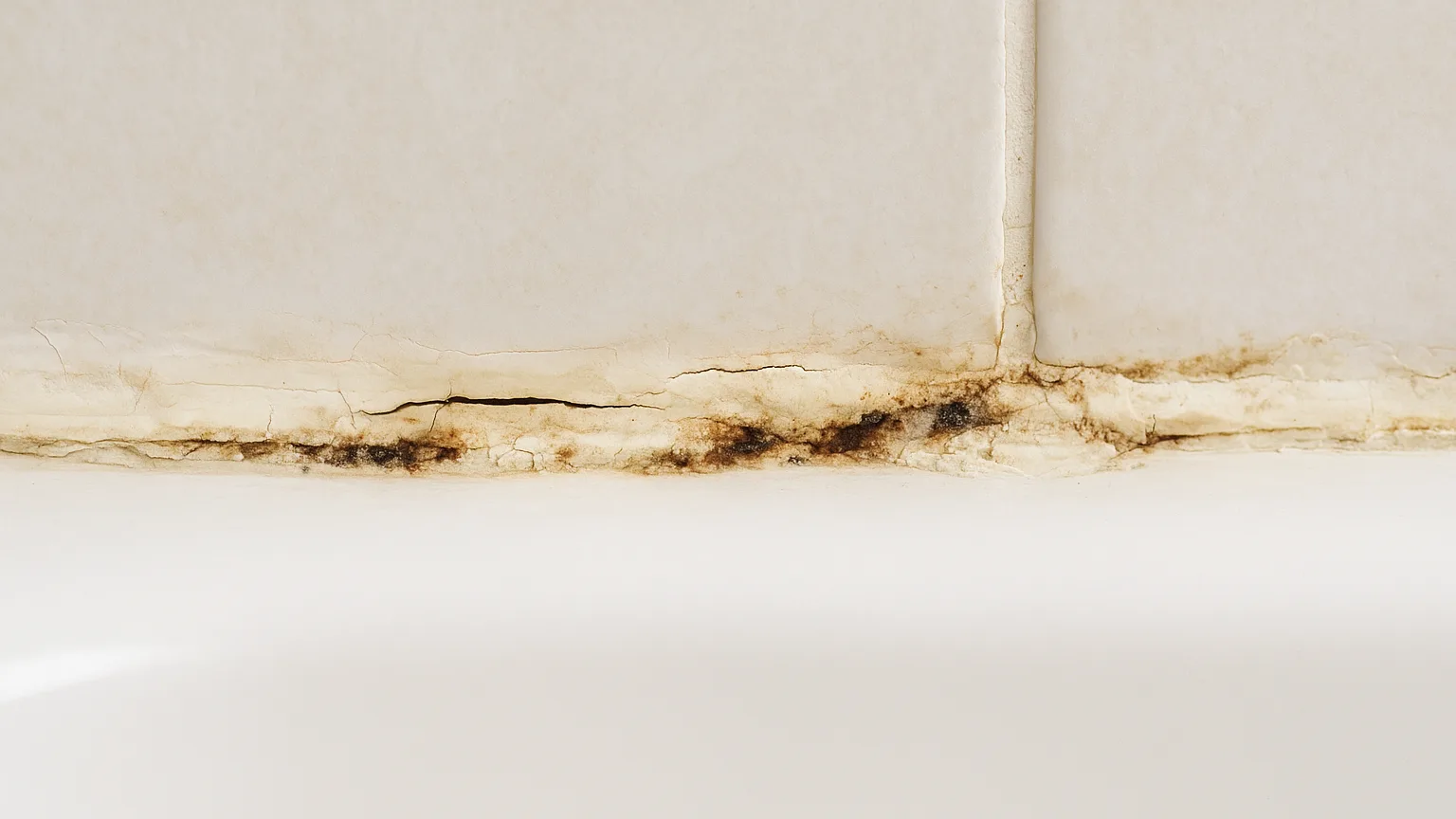
Walk the yard during a hard rain with an umbrella. Look for puddles near the wall that stay for more than a day, mud splashed up on the siding, and mulch washed against the house. Then head inside. Musty smells, white chalky lines on basement walls, and peeling paint near the floor all point to water finding its way in from outside.
Pro Tip: Keep Six Inches of Siding Showing
Soil and mulch should stay at least 6 inches below the bottom of your siding. When dirt creeps higher, water wicks into the wall and gives termites a hidden path inside.
Each spring, rake old mulch away from the house before adding new. Top it off thin, about 2 to 3 inches deep, so the bed never builds up into a ridge that pushes water back toward the wall.
Every Roof Is a Giant Funnel
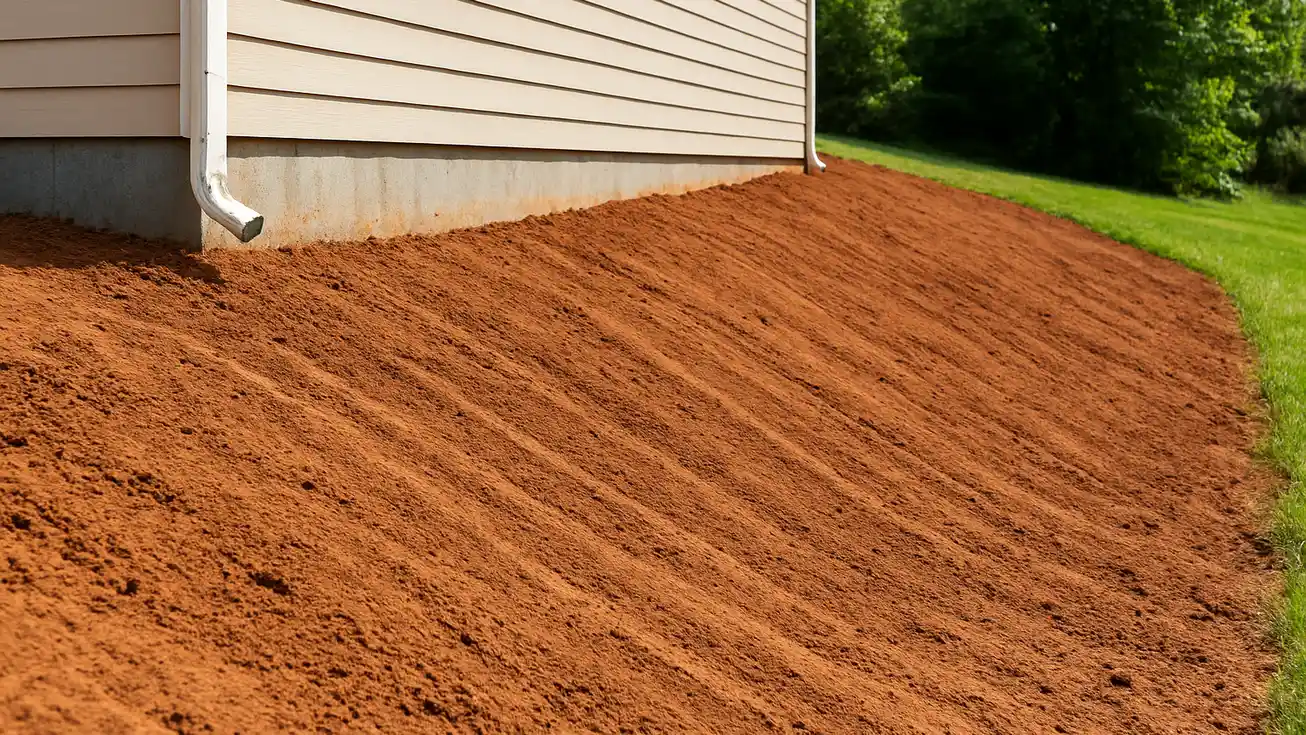
Grading gets most of the blame, but downspouts often do more damage. Think about the math. One inch of rain on a 1,000 square foot roof makes about 620 gallons of water. Your gutters collect all of it and send it to a few small spots at the corners of the house.
If a downspout ends right at the wall, that corner gets soaked like a garden hose left running. Even a perfect slope struggles to handle that much water in one place.
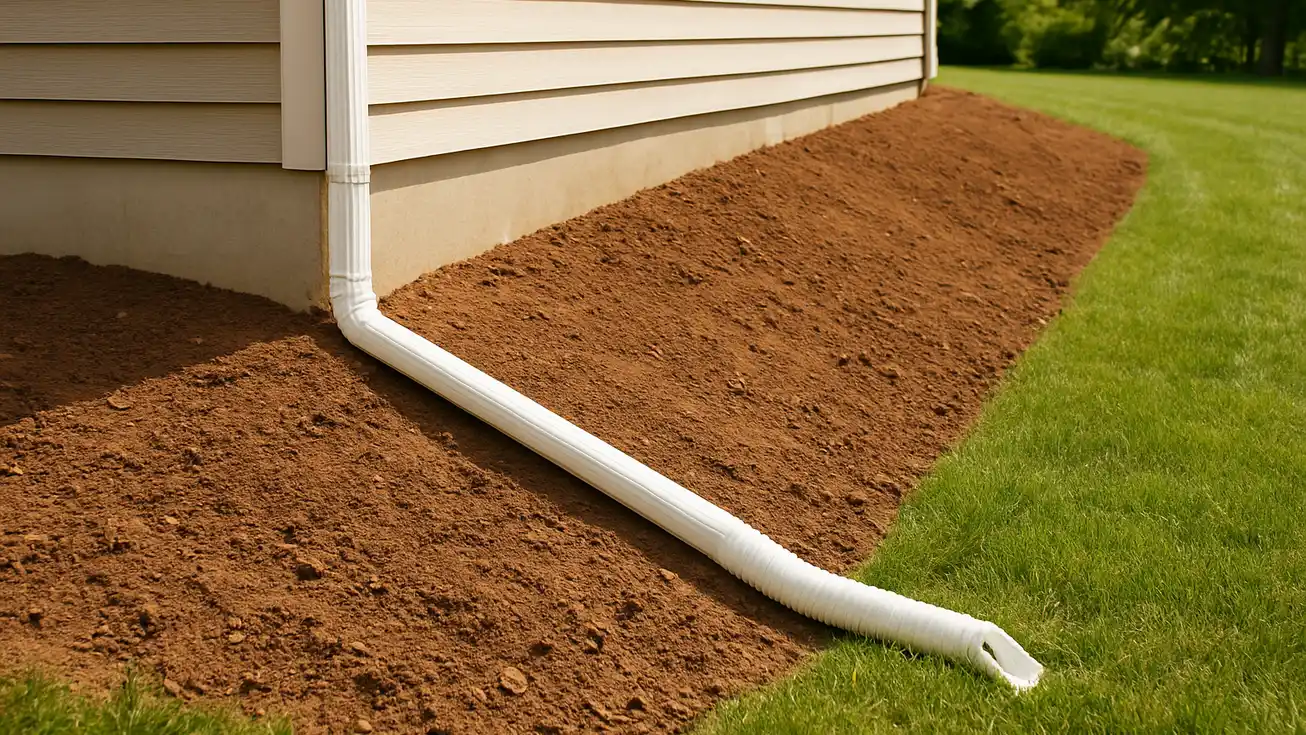
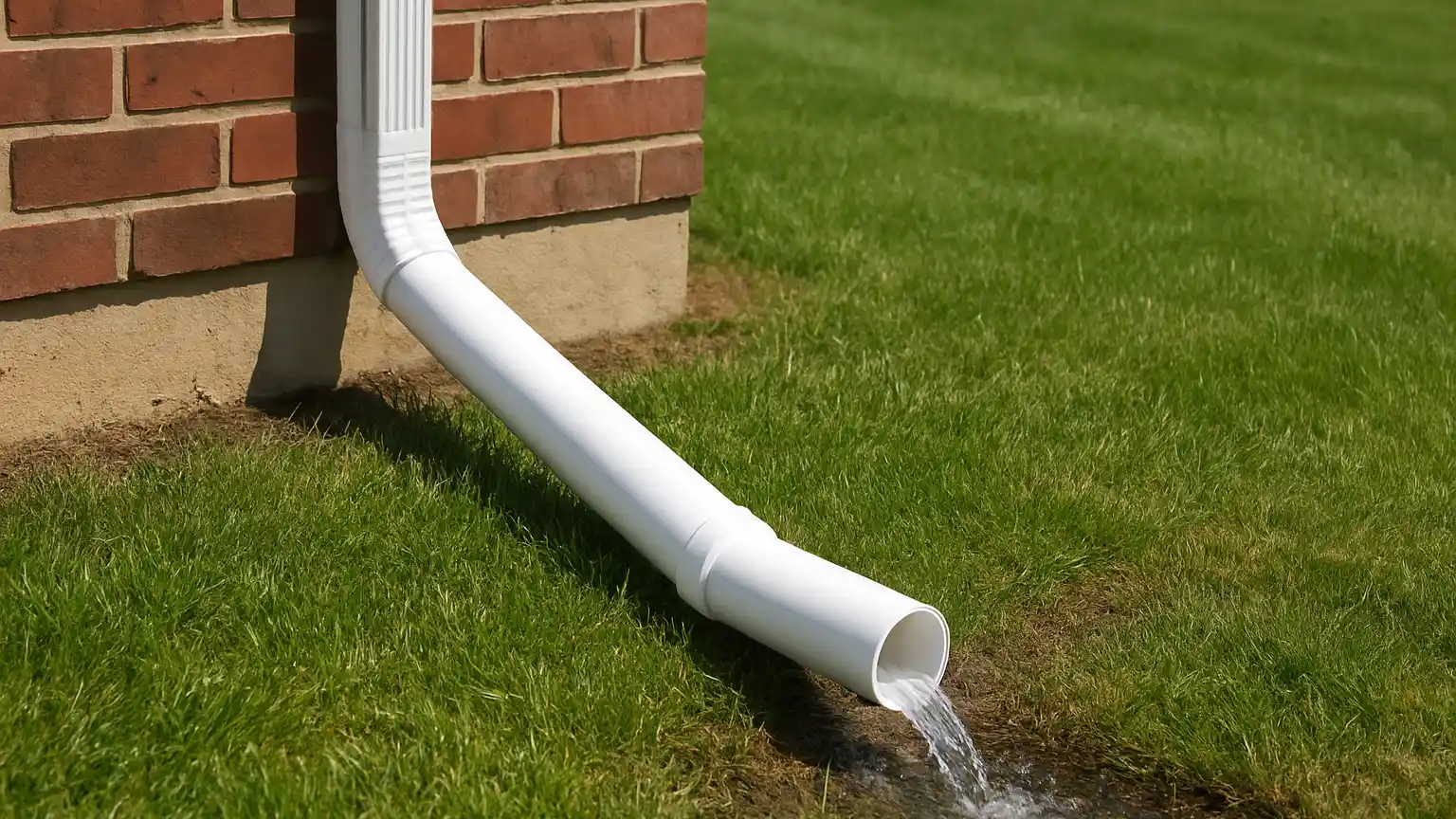
The fix is simple and cheap. Move the water farther out. Aim for at least 4 to 6 feet away from the foundation, and 10 feet is even better if your yard allows it. Here are the most common ways to do it:
- Flip-up extensions: Easy to add, and they fold up when you mow.
- Splash blocks: Better than nothing, but most are too short to help on their own.
- Buried pipe with a pop-up emitter: Clean looking, and it carries water well out into the lawn.
- Rain barrels: Great for watering, as long as the overflow also points away from the house.
One more thing to check. Do not aim a downspout into a fresh planting bed hugging the wall, or toward a neighbor's yard. And clean your gutters each fall. A clogged gutter spills over the edge and dumps water right at the base of the wall, no matter how long your extensions are.
Pro Tip: Use Solid Pipe Near the House
When you bury a downspout extension, use solid pipe, not the kind with holes in it. Perforated pipe leaks water along the way, often right beside the foundation you are trying to protect.
After the first big storm, walk out to the pop-up emitter. If it did not open, the pipe may be clogged or sloped wrong. A quick check now saves a wet basement later.
When the Yard Needs More Than a Shovel
Sometimes extensions and a few bags of soil are not enough. If your string test shows the yard tipping toward the house, or water still pools after storms, a bigger fix may be needed.
Regrading the Foundation Zone
Add clean fill soil with some clay in it against the house, pack it down firmly, and shape it to fall away from the wall. Finish with a layer of topsoil. Do not use mulch or sand to build the slope, since water passes right through them. Keep the finished grade well below the siding.
Swales and Dry Creek Beds
A swale is a wide, shallow dip in the yard that guides water around the house and off to a safe spot. Lined with river rock, it becomes a dry creek bed that looks like a garden feature. Desert Vine Landscaping often points out that this works well where storms hit hard and fast, because the rock slows the water and keeps soil from washing out.
French Drains
A French drain is a gravel trench with a perforated pipe inside. It catches water underground and carries it away. It is a good choice for soggy spots that never seem to dry out, but it costs more and takes real digging.
Do Not Forget the Sprinklers
Many basement leaks blamed on rain actually start with a sprayer aimed at the wall or a cracked drip line by the foundation, which is why sprinkler and drip repair belongs on the same checklist as grading.
Your plants matter too. Thirsty shrubs packed against the house get watered right where you want things dry, and that ties into knowing how close to plant greenery before you dig.
Pro Tip: Keep Six Inches of Siding Showing
Soil and mulch should stay at least 6 inches below the bottom of your siding. When dirt creeps higher, water wicks into the wall and gives termites a hidden path inside.
Each spring, rake old mulch away from the house before adding new. Top it off thin, about 2 to 3 inches deep, so the bed never builds up into a ridge that pushes water back toward the wall.
Let the Water Walk Away
Basement water rarely comes from one big mistake. It comes from small changes that pile up: settling backfill, extra mulch, a flat patio, a short downspout, a sprinkler aimed at the wall. A string test, longer downspout extensions, and a little regrading fix most of these problems for very little money. Swales, dry creek beds, and French drains handle the tougher cases.
Once the water is moving away from your home, the next question is how close your trees, shrubs, and roots can safely grow to the siding, roof, foundation, and pipes. Get that spacing right, and your yard starts working as one system that cools the house, controls rain, and protects the structure for years to come.