
Part 2 of 3 in the series The Metal Roof Decision: What Remodelers Wish They'd Known Sooner.
Part one of this series stayed below the surface. Framing loads, decking condition, and airflow decide whether a metal roof belongs on a house at all. That first honest talk about question nobody asks before quoting happens before anyone unrolls a color chart, and it saves people from expensive reversals.
Once that groundwork is settled, homeowners usually think the hard part is over. Pick a color. Sign the lower bid. But this series was shaped in part by the field experience of The Metal Roofers, whose crews spend as much time removing failed metal roofs as installing new ones, and the pattern they see is worth repeating: the panel is rarely the reason a roof fails.
Two Roofs, One Street, One Difference
Picture two homes four doors apart. Both are 1970s ranches with simple gable roofs. Both got 24 gauge standing seam in the same charcoal gray, installed about a year apart by two different crews. On paper, the roofs were twins.
At year nine, one still reads crisp from the curb. Straight seam lines. Even color. Tight trim at the rakes. The other one shows soft waves in the panel field, dark streaking below the end laps, and gray sealant squeezing out where the ridge meets the panel ribs. One homeowner has a roof with thirty good years left. The other is pricing repairs.
The metal came off the same kind of coil. What differed was everything around the metal: how it was allowed to move, what the paint layer was made of, which fasteners held it down, and how carefully the crew handled it on the day it went up. Those four things almost never appear on a one page bid, and that is exactly why two bids can look the same and buy completely different roofs.
Exposed Fasteners Versus Concealed Clips
Metal moves. A twenty foot panel can grow and shrink close to a quarter inch between a freezing morning and a hot afternoon. It does this every day, then every season, for decades. How a roof system handles that movement is the widest gap between two bids that read alike.
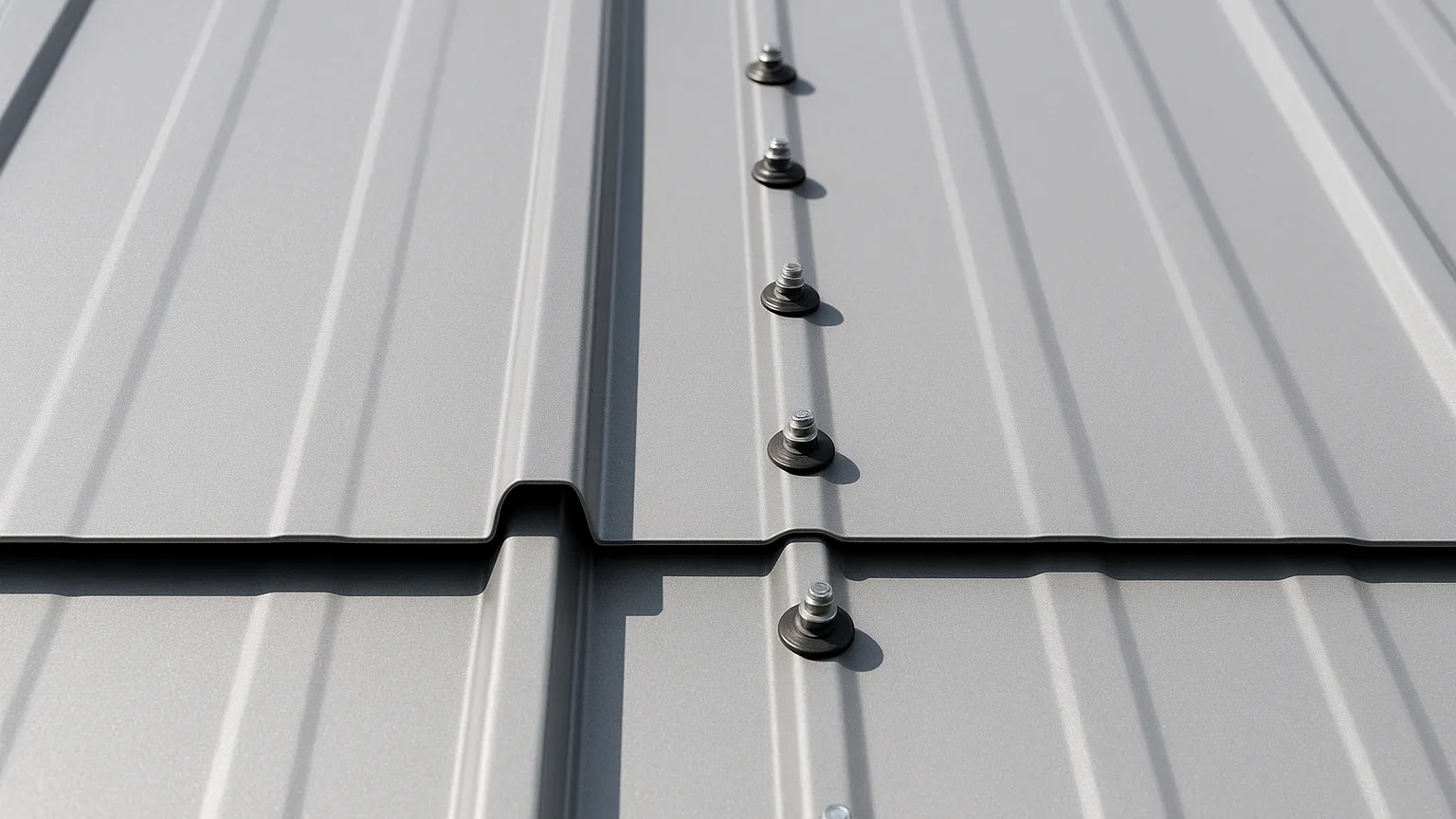
Through fastened panels, sometimes called exposed fastener or ag panel, are screwed straight through the face of the metal. Each screw has a rubber washer that seals the hole. It is fast, it is affordable, and it works. But a typical house can carry a few thousand of those screws, and every one is a small hole in your roof. The washers get brittle with age. A screw driven too hard mushrooms the washer. A screw driven too soft never seals. Years of panel movement slowly widens the hole around the shank.
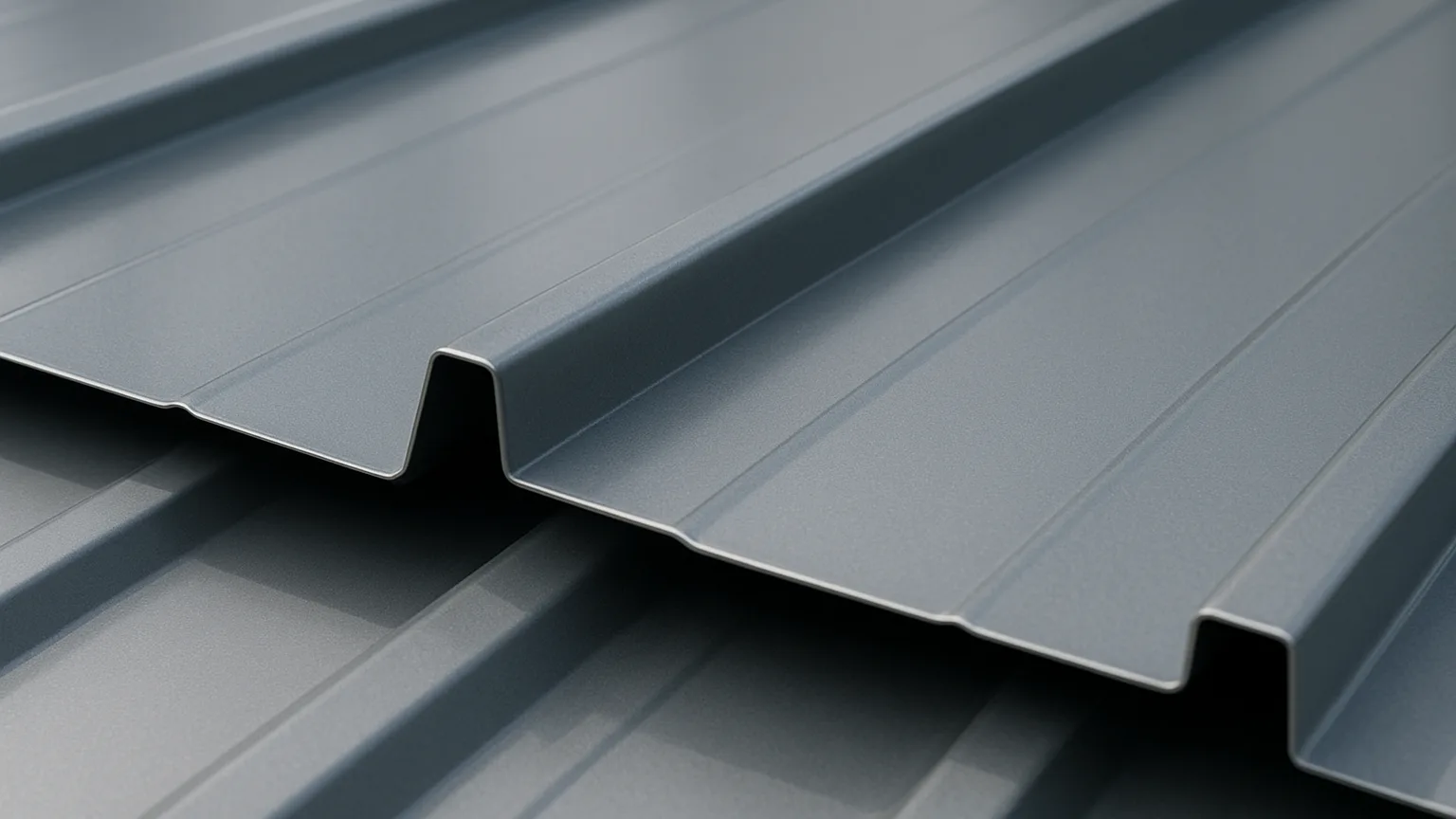
Standing seam works differently. The panel hangs on clips hidden under the seam, so nothing punctures the water surface in the field of the roof. Floating clips let the panel slide as it expands. Fixed clips do not. Put fixed clips on long panels and the metal fights itself, which shows up as waviness in the panel field and stress at the seams. Snap lock seams are pressed together by hand. Mechanically seamed panels are folded shut with a seaming machine, which is what a shallow pitch really wants.
Questions That Reveal The Fastener System
- Are the fasteners exposed or concealed, and if exposed, what washer material is used?
- Are the clips fixed or floating, and at what panel length does the crew switch?
- Is the seam snap lock or mechanically seamed, and does that match my pitch?
- How long are my panel runs, and are there any end laps at all?
- Is the panel fastened to solid decking, or to purlins and battens?
Ask those five questions of two bidders and the cheaper number often explains itself in under a minute.
Paint Systems Are Not All The Same
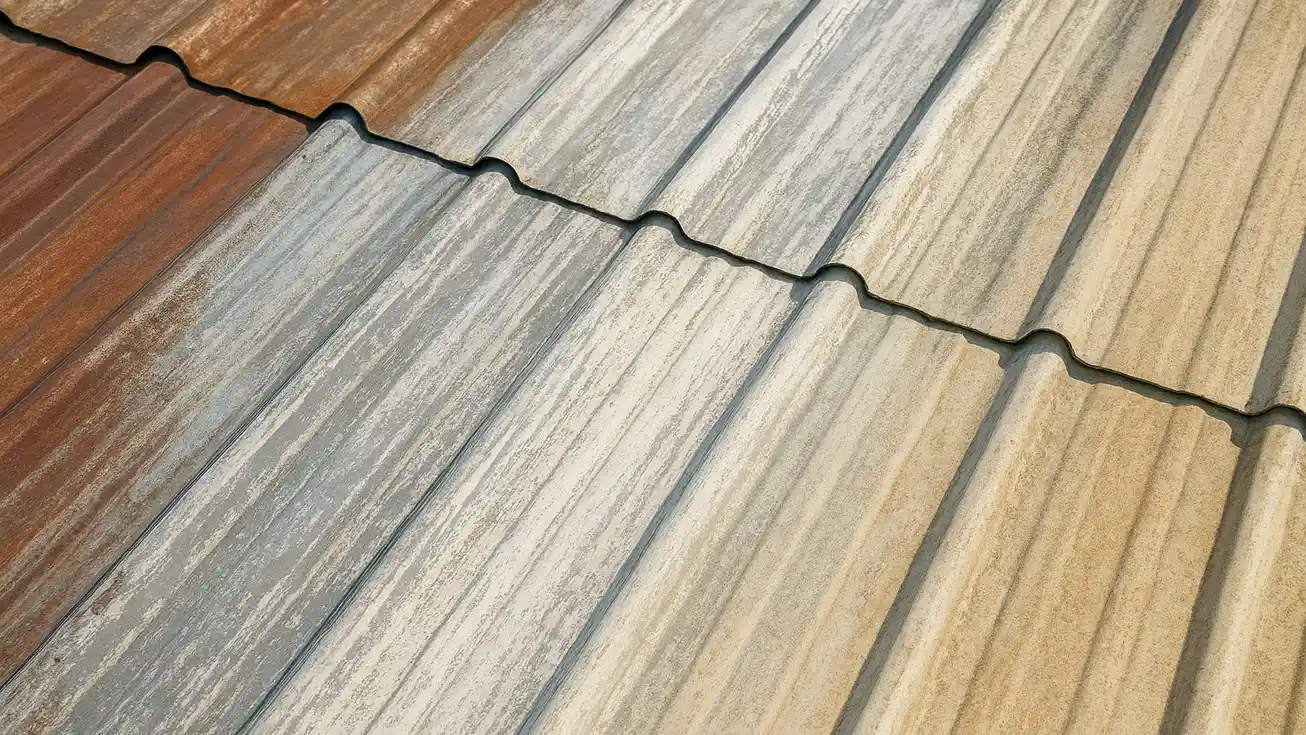
Color is not just color. Most residential metal comes with one of two paint families. Silicone modified polyester is the value option. It is a hard film, it holds up fine, and it costs less. It also chalks and fades sooner, and it fades unevenly on deep reds, blues, and blacks in strong southern sun. The other family, PVDF, holds pigment far better over the long haul. It usually adds a modest amount to material cost and buys ten to twenty extra years of looking new.
Underneath the paint sits the metal coating that fights rust. Aluminum zinc coated steel is the common residential choice, and the coating weight matters. So do the cut edges, since every field cut exposes bare steel that has to reseal itself. Near salt air or heavy road spray, that detail moves from minor to critical.
Existing metal roofs deserve a note here too. A factory finish cannot be sprayed back on in place, but a properly prepared roof coating can renew the surface, seal weathered seams, and buy real years on a panel that is still sound underneath.
Where Gauge Quietly Matters
Gauge is the thickness of the steel, and lower numbers mean thicker metal. Twenty four gauge is stiffer than twenty six. It resists denting from hail and boot traffic, it holds a flatter appearance across wide panels, and it takes a crisper hem at the eave. Many bids simply say standing seam and stop there. That silence is the hidden variable. Ask for the gauge in writing, and ask whether the panel has striations or pencil ribs, which are the small stiffening lines that keep broad flat panels from reading wavy in low sun.
Reading Two Bids Side By Side
The fix for a confusing bid is not more haggling. It is a spec sheet. Ask each bidder to list the following, then compare line for line instead of price for price.
- Panel profile, manufacturer, and panel width
- Steel gauge and metallic coating weight
- Paint system by name, with the chalk and fade terms spelled out
- Clip style and clip spacing, or the fastener schedule for exposed systems
- Underlayment type, including high temperature self adhered membrane where it is needed
- Sealant type at seams and terminations, since butyl and standard caulk age very differently
- Trim gauge and whether trim color is factory matched to the panel
- How dissimilar metals are separated at gutters, vents, and flashings
Then there is the part no document captures: the hands doing the work. Cutting panels with an abrasive blade throws hot steel filings across the finish, and those specks rust into the paint within a season. Nibblers and shears avoid that entirely. Panels stored flat in wet grass wick moisture between the layers and stain before installation day. Crews that walk on the ribs rather than the flats leave dents you will notice at sunset for the next thirty years. Careful sequencing of small details is what separates work that reads intentional from work that reads rushed, the same way thoughtful transitions decide whether carpet in open plans looks designed or accidental.
This is also where the guidance from The Metal Roofers lands hardest. The failures they pull off houses cluster around a short list: wrong clips for the panel length, sealant used where a formed metal detail belonged, and fasteners driven by feel instead of by torque setting. None of those cost much to do right the first time. All of them cost a roof when skipped. And a fair share of the trouble shows up later, in the final week, which is why mistake homeowners make deserves its own close look in part three, along with trim, gutter transitions, warranty registration, and the walkthrough most people rush.
The Spec Sheet Outlives The Handshake
Two houses on the same street, the same panel, the same color, and two futures. The difference was never the metal. It was movement handled or ignored, a paint system chosen for twenty years or for eight, fasteners that stay sealed or slowly loosen, and a crew that treated the finish as the finished product rather than as a delivery item. Every one of those choices is knowable before a single sheet arrives on site.
So slow down at the bid stage, where the leverage actually is. Ask for gauge, paint system, clip type, sealant type, and underlayment in writing, then compare those answers instead of comparing totals. A metal roof is one of the few remodeling decisions that either disappears from your life for three decades or reappears every spring. The paperwork you insist on today is what decides which version you get.
