
Part 3 of 3 in the series The Metal Roof Decision: What Remodelers Wish They'd Known Sooner.
Part two of this series looked at why two houses can get the same panel and end up with two very different roofs, all because of coating, fastener choice, and installer habit. Now we come to the part almost nobody plans for. The panels are up. The driveway is clean. The homeowner is thrilled. And this is exactly the week when the most expensive mistakes get made.
This series was shaped by the field experience of The Metal Roofers, whose crews spend as much time correcting rushed finish work on other people's installs as they do putting new panels down. Their point has been consistent: a metal roof rarely fails in the field of the panel. It fails at the edges, the transitions, and the small details signed off in a hurry.
The Final Week Illusion
Metal panels look finished long before the roof is finished. Once the flat runs are screwed or clipped down, the house reads as complete from the street, and that visual completeness creates pressure. Homeowners stop watching. Crews feel the pull of the next job. Change orders get waved through. Final payment gets released.
But roughly the last ten percent of the work carries most of the long-term risk. Ridge caps, hip closures, valley metal, sidewall and headwall flashing, pipe boots, drip edge, and the gutter transition all happen in that stretch, and those are the pieces that manage water, wind, and thermal movement. Get them right and the roof quietly outlives the mortgage. Get them sloppy and you will be on a ladder in four years wondering what happened to your fifty year product. So the mistake is not a single act. It is inattention at precisely the moment attention pays best.
The Details That Fail Before the Panels Do
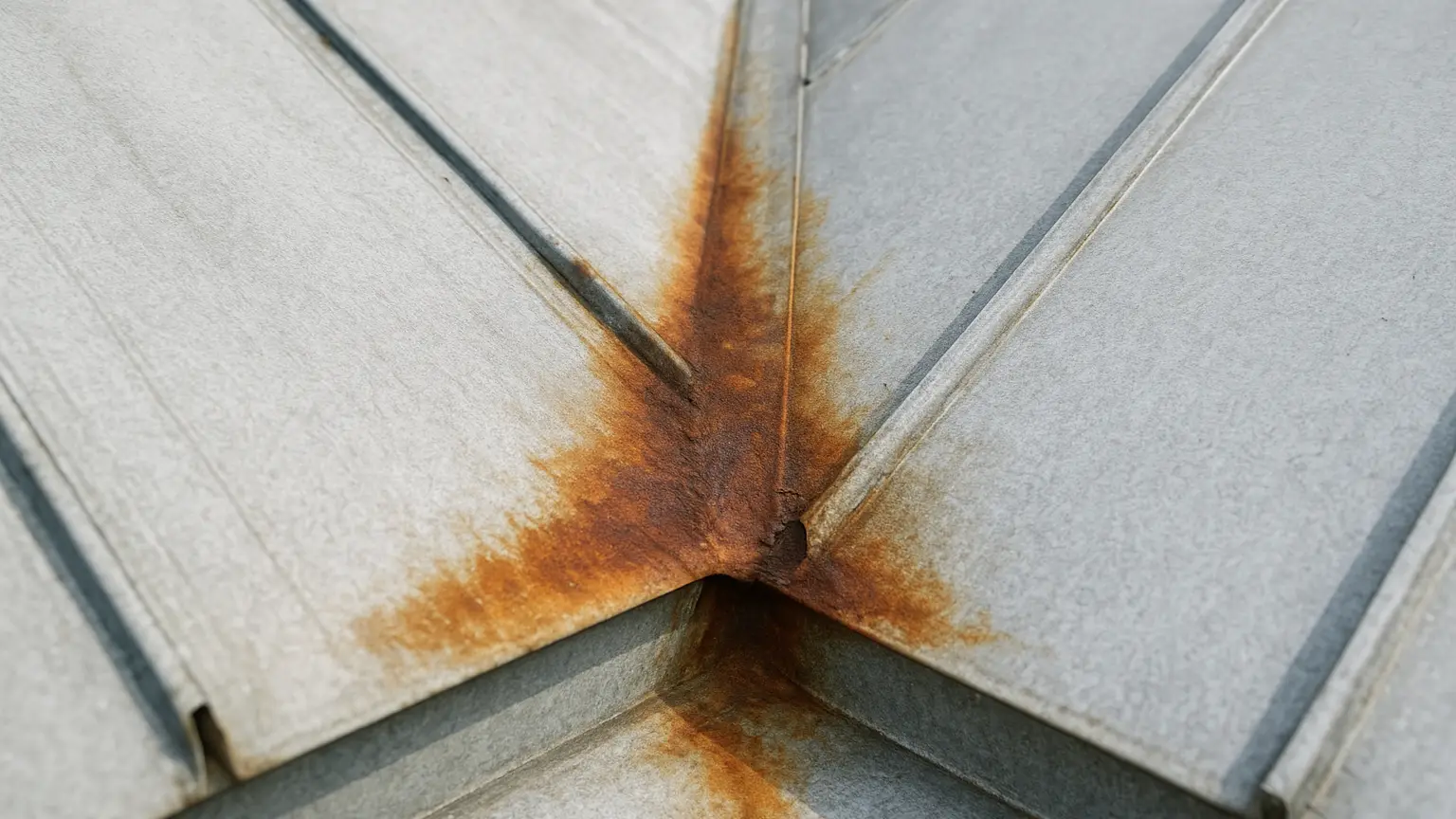
Ask any crew that does repair work what they see most, and the answer is almost never a hole in a panel. It is a penetration or a transition treated as an afterthought. Metal expands and contracts more than most roofing materials, so anything that pins it in place or blocks its movement becomes a stress point.
These are the areas worth your own eyes before you sign anything:
- Valleys. Panels should be cut clean and hemmed, not just laid over valley metal with exposed cut edges. Open cut edges rust first, and debris catches on them.
- Headwall and sidewall flashing. Metal should tuck behind siding or into a reglet, never just caulked to the wall face. Sealant alone is a countdown, not a detail.
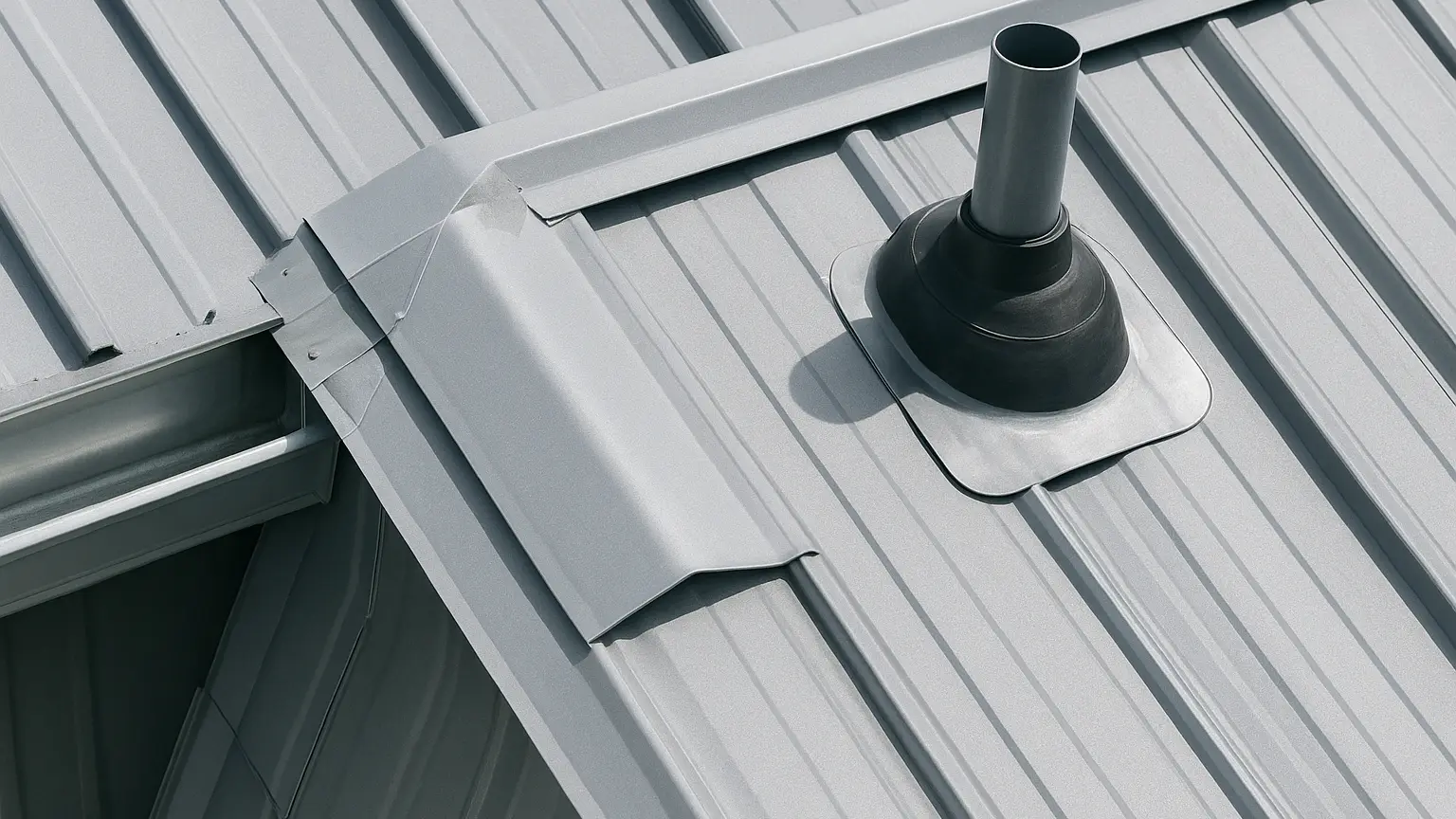
- Pipe boots. Look for a high temperature boot rated for metal, with the base formed to the panel rib profile. A generic asphalt boot squashed onto ribs is a future leak.
- Ridge and hip closures. Foam or metal closures should fill every rib gap. Open ribs at the ridge let in wind driven rain, snow, wasps, and birds.
- Eave and rake trim. Drip edge should direct water into the gutter, not behind it. This one detail causes more fascia rot than any other.
- Fastener lines. Straight, evenly seated, no dimpled washers, no overdriven screws. Crooked rows usually mean rushed rows.
The valley detail deserves extra attention on remodels. Changing roof geometry during an addition often creates new valleys that were never part of the original water path, a structural reality question nobody asks before quoting covered in more depth at the front end of this series.
The Gutter Transition Nobody Talks About
Metal roofs shed water faster than shingles. That sounds like a benefit until you realize a gutter sized for an asphalt roof can be badly outmatched during a hard rain. Water overshoots, sheets past the gutter, and lands at the foundation.
Two things fix this. First, correct panel overhang into the gutter, usually about an inch to an inch and a half depending on profile. Second, gutter sizing and hanger spacing that match the new runoff speed. On steeper pitches or long panel runs, an oversized gutter or a snow retention system may be the difference between a dry crawlspace and a spring drainage project.
Slowing Down the Final Sign-Off
A proper final walkthrough is not a handshake in the driveway. It is a slow, specific, written review that happens while the crew and their equipment are still on site. That last part matters. Once the truck leaves, every correction becomes a scheduling problem instead of a ten minute fix.
Do This From the Ground
You do not need to climb anything. Walk the full perimeter with binoculars or a phone camera zoomed in, and look for these:
- Trim lines that stay parallel to the roof edge with no waves or gaps
- Consistent panel spacing and no oil canning that reads as visible waviness on flat runs
- Clean, straight cuts at rakes and valleys with no jagged tin snip edges
- Sealant used sparingly as a secondary defense, not smeared as a primary one
- Gutters hung level and firmly attached, with downspouts discharging away from the foundation
- No shavings or metal filings left on panels, which rust into permanent orange freckles within weeks
That last item surprises people. Drill shavings are the most common cause of rust spots on a brand new roof, and once they stain the finish, correcting them can mean touch up work or eventual metal roof painting down the road rather than a simple wipe down.
Do This From the Attic, Then Get It in Writing
Go up on a bright day with the lights off. Any daylight showing at a ridge, valley, or penetration is a conversation to have immediately. Check that ventilation baffles were not crushed and that no insulation got shoved over intake vents. Then check again after the first heavy rain and the first cold snap, since condensation problems show themselves in temperature swings rather than storms.
Finally, create a punch list with dates, noting who is responsible for each item and when it will be handled. Hold a fair retainage until every line is closed. This is standard practice on commercial jobs and completely reasonable on residential ones, and good contractors expect it.
Warranties, Registration, and the Twice-a-Year Habit
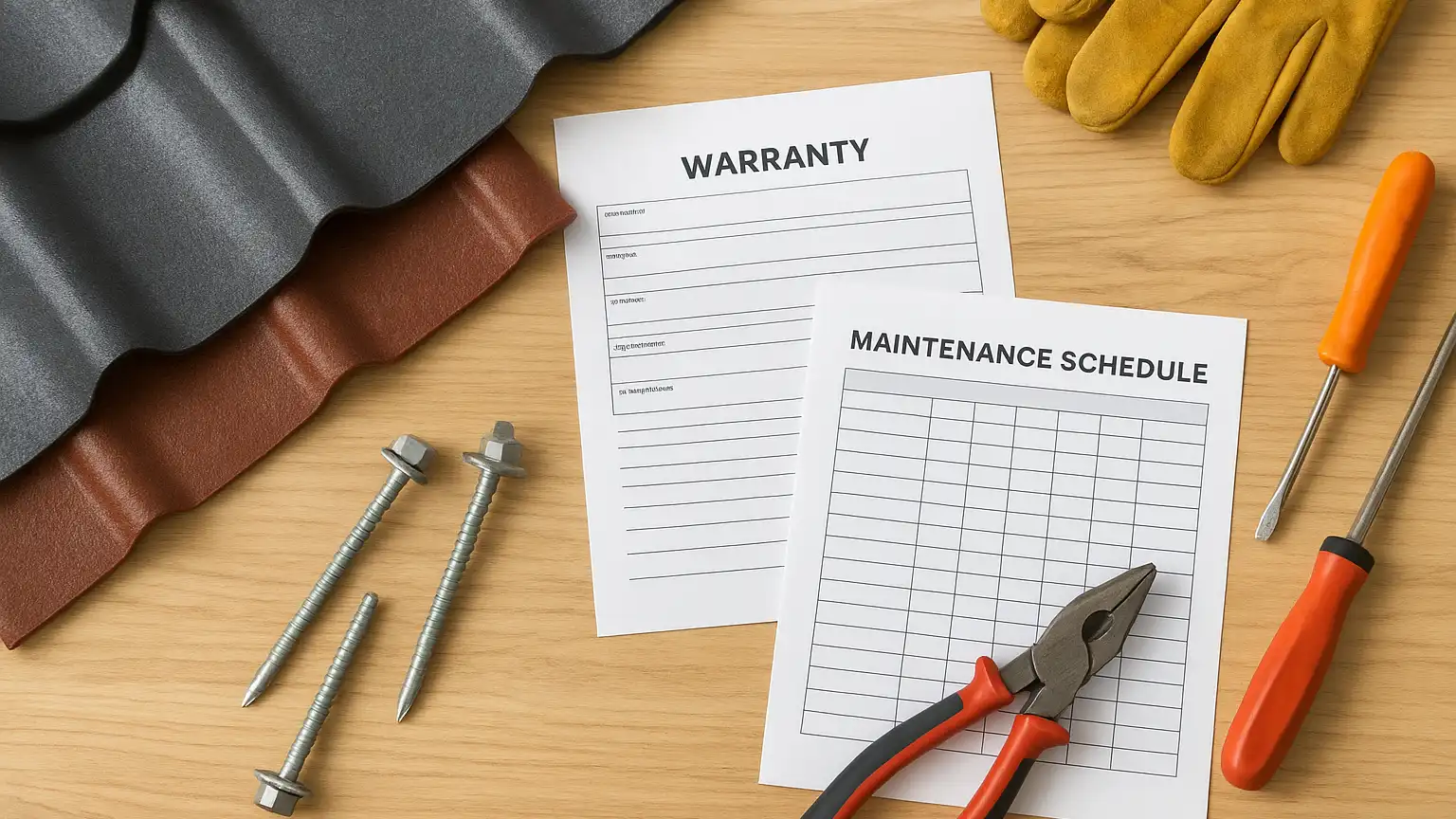
Metal roof warranties are usually two separate promises. The manufacturer covers the finish and sometimes the substrate. The installer covers the workmanship. They are not interchangeable, and the one that saves you money in year six is almost always the workmanship warranty.
What to Collect Before Final Payment
- The manufacturer warranty document with the exact coating, color, and gauge listed
- Written registration confirmation, since many finish warranties require the homeowner to register within a set window
- The installer's workmanship warranty with clear length and coverage terms
- Product data sheets for panels, fasteners, and underlayment
- Leftover trim pieces and touch up paint labeled with the color code
- Photos of the underlayment and flashing before panels went on, which are gold if a dispute ever arises
Read the exclusions. Most finish warranties are voided by incompatible metals, standing water, or contact with pressure treated lumber, and some exclude damage from foot traffic, which is why the fastener and detailing choices covered in two homes, same panel, wildly carry through into what you can actually claim later.
The Maintenance Rhythm That Costs You Almost Nothing
Metal roofing is low maintenance, not no maintenance. The rhythm takes about an hour twice a year.
- Spring. Clear valleys and gutters of pollen, seeds, and grit. Rinse the roof with plain water. Check pipe boots for cracking.
- Fall. Clear leaves before they compost into valleys. Confirm gutters drain freely ahead of freeze cycles. Look at trim seams for any lifting.
- Every few years. Have exposed fasteners inspected if your system uses them, since gaskets are the wear item on that design.
- After major storms. A quick ground level scan for lifted trim, dented panels, or displaced closures.
Timing matters as much as thoroughness. Closing punch list items and clearing debris before the first freeze prevents ice from parking in a valley all winter, and homeowners already understand that sequencing from interior work like incorporating carpeting into open floor plans, where the finish stage decides how the whole project reads.
The Roof You Get Is the Roof You Finish
This series started underneath the roof, with decking, framing, and ventilation questions that decide whether metal belongs on a house at all. Then it moved to the specification layer, where profile, coating, and fastener system quietly separate a roof that ages gracefully from one that disappoints early. This last stretch sits at the edges, in the trim and flashing and gutter details a homeowner can actually see, question, and insist on before the final check clears.
What ties all three together is one idea worth carrying into any remodel decision. A metal roof is not a product you buy. It is a system you assemble, inspect, register, and tend to. The homeowners who end up thrilled at year twenty are almost never the ones who spent the most. They are the ones who stayed curious for one extra week, asked about the closure at the ridge, and walked the perimeter with their own eyes before saying it was done.
